

Non-custodial Exchange vs Custodial Exchange
cryptocurrencies: custodial exchange vs non-custodial exchange
Non-custodial Cryptocurrency Exchange
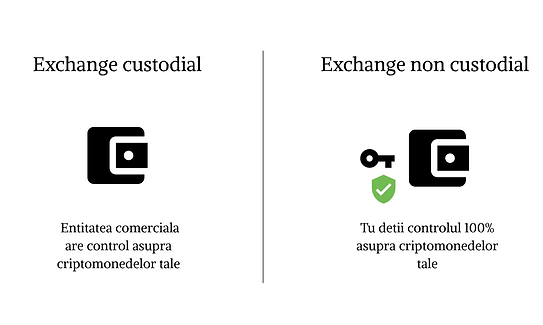
If you do not want a foreign entity to have access to your funds and only you to have access, you should probably use a non-custodial exchange. Such a service is completely different from a platform like Binance. This service allows only you to have access to your funds. Thus, no entity, whether public or private, will be able to perform operations from your wallet or close it.
Unlike the custodial exchange where you need to create an account and go through a long identification process, this type of exchange allows you to trade Bitcoin or other cryptocurrencies without the need to create an account. To use the services of such an exchange, you need to have your own wallet (here may redirect to the page on how to create your own wallet) or if you want to make a payment to someone, you can just enter the destination address (QR code or wallet address).
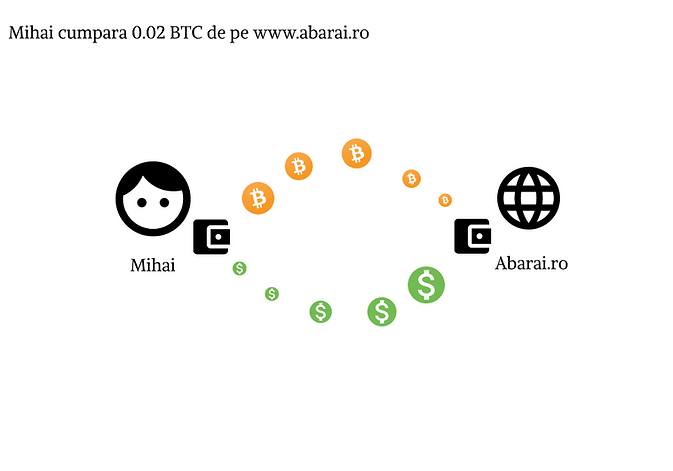
An example of such an exchange is Abarai, where you can purchase Bitcoin or other cryptocurrencies without having to go through lengthy registration and identification procedures.
Using Abarai you can buy Bitcoin or other cryptocurrencies without anyone else having access to your funds. You create a wallet yourself to store your cryptocurrencies. Additionally, you can sell Bitcoin or other cryptocurrencies and receive the money on your card or account.
Abarai offers a wide range of exchange services. You can use various payment methods to buy or sell Bitcoin, Ethereum, Litecoin, and many other cryptocurrencies, such as:
Credit card or debit card
SEPA transfer or SWIFT transfer
Astropay or Netseller
Skrill
Cash using services from physical locations (here redirect to the page with locations)
bitcoin transaction with non-custodial exchange
Custodial Cryptocurrency Exchange
There are many custodial platforms, both from Romania and abroad. Probably the most well-known is Binance. It is used by millions of people worldwide. To use the platform, you need to create an account and go through identity verification (KYC). If everything is in order and the account is approved, you can access the services offered. After registration, you receive a digital wallet. This is linked to your account. But this wallet is not just yours. The company managing the platform also has access to it. It is a convenient system, but it involves trusting a third party to manage your funds.
All transactions made on a custodial exchange are linked to the user’s identity. The platform keeps these data for at least 5 years. This means that every action remains recorded: what you bought, when, and for what value. The same happens on platforms from Romania. A well-known example is Bitcoin Romania, which follows the same model. Identity verification, data stored long-term, and possible access from authorities.
Besides the fact that they control users’ funds, custodial platforms come with another major risk: security. Because they are visible, large, and store the assets of many people, they become constant targets for hackers. The history of crypto is full of examples where these platforms have been compromised. Sometimes attacks targeted the entire platform – all funds were stolen. Other times only certain individual accounts were affected. Regardless of the scale, the risk remains: when you do not own the keys, you do not own the funds.

Advantages of Using a Non-custodial Exchange:
Complete Control Over Your Funds: You are the only one who can control your funds, and the private keys are stored on your own device and not on the servers of an exchange platform.
Increased Security: Because all funds are kept on your device, security is much higher than that presented by an exchange platform like Binance or Crypto.com
Privacy and Anonymity: On an exchange platform, each transaction is associated with your user and the event is stored on the platform’s servers. For example, you cannot send money to your brother or cousin from an exchange platform without the transaction being recorded as yours.
Financial Independence: Users can always make transactions without considering the policies and financial availabilities of an exchange platform.
Disadvantages of Using a Custodial Exchange:
Security Risk: The cryptocurrency exchange stores your funds, and for this reason, your funds are much more vulnerable. Exchanges are among the favorite targets for hackers because they store large sums of money and present many vulnerabilities.
Risk of Exchange Insolvency: If a custodial exchange goes bankrupt or becomes insolvent, users might not recover their funds. Legal procedures can be long and complicated. Although some exchanges claim to have insurance on all funds, in reality, it may take years or even not get the money back in the event of insolvency/cyber attack.
Withdrawal Limitations: Some exchanges may impose withdrawal limits or even freeze funds in accounts, especially in situations of financial or legal uncertainty. They may request additional documents that put the user in difficulty, thus delaying access to funds.
Stricter Government Regulations: Custodial exchanges are more subject to regulations and compliance requirements imposed by governments compared to non-custodial ones. This is because they are digital wallet providers and have much greater responsibilities than a non-custodial exchange, which only performs the actual exchange and does not store clients’ funds.
In conclusion, a non-custodial crypto exchange offers a safer and more private alternative for users who want to keep control over their cryptocurrencies and maximize their financial security.
If you want to learn more about cryptocurrencies and Bitcoin, we recommend visiting our academy. Another very good source where you can learn more about Bitcoin is Coinmarketcap.