

In a move that has captured the attention of financial markets and the crypto community alike, financial giant Citadel recently sent an official letter to the United States Securities and Exchange Commission (SEC), expressing its disagreement with the current regulatory framework of decentralized finance (DeFi). This challenge highlights the growing tensions between the rapid innovation of the DeFi ecosystem and the need for authorities to ensure investor protection and market stability. In this context, an analysis of Citadel’s letter reveals not only key points of dispute but also potential implications for the future of DeFi regulation, igniting a new wave of controversy around this expanding sector.
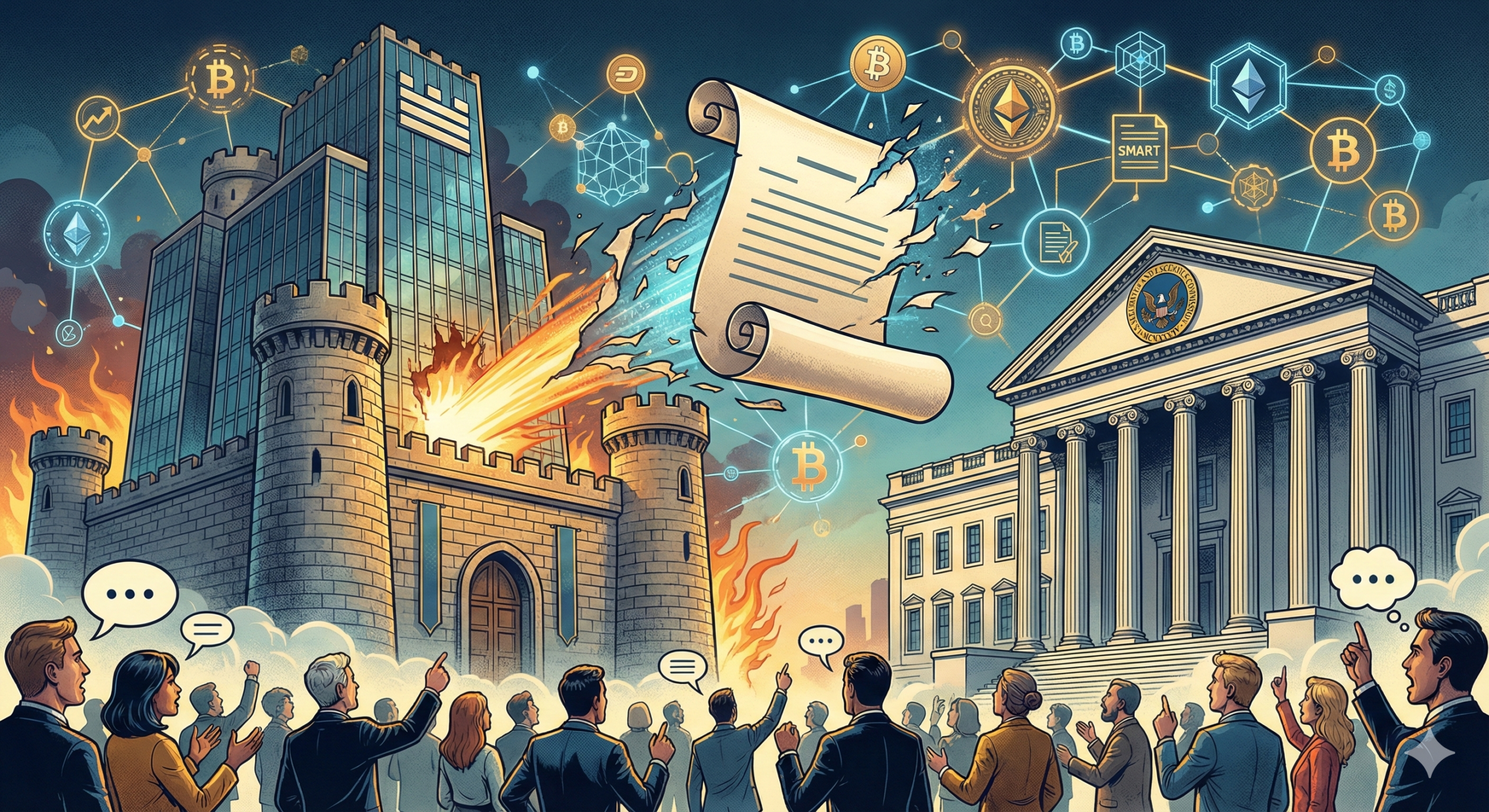
Citadel Challenges the Current DeFi Framework in Dialogue with the SEC
In the letter, Citadel highlights several critical points, including:
- The inconsistency between the legal definition of certain DeFi assets and their functional reality
- Increased risk of arbitrary interpretation in law enforcement, affecting innovation
- The lack of a framework tailored to the specifics of blockchain and peer-to-peer technologies
To support its arguments, the company included an annex with a simplified comparison between regulated aspects versus real DeFi practice:
| Regulated Aspect | DeFi Reality |
|---|---|
| Clearly identified entities | Anonymous participants and distributed nodes |
| Centralized control of transactions | Smart contract automation and distributed consensus |
| Fixed, hard-to-adapt rules | Flexibility and rapid evolution of protocols |
Critical Legal Issues Highlighted in the Letter to Authorities
In the letter addressed to the SEC, Citadel emphasized a series of fundamental legal issues that call into question the current DeFi regulatory framework. Among these, the focus was on ambiguities regarding the legal status of certain decentralized financial instruments, which make it difficult to interpret compliance with securities legislation. Additionally, the lack of a clear framework for the accountability of DeFi platforms complicates investor protection measures, while the risks of fraud and market manipulation remain difficult to control in the absence of oversight adapted to the new technology.
- Controversial definitions regarding “security” in the context of DeFi tokens
- Controversies related to jurisdiction and the applicability of current laws
- The need for increased transparency in protocol operations and financial activities
- Challenges in defining and identifying responsible actors in the decentralized ecosystem
| Aspect | Legal Challenge | Potential Impact |
|---|---|---|
| Token Status | Unclear classification | High risk of litigation |
| Accountability | Absence of a centralized entity | Difficult enforcement of regulations |
| Compliance | Incoherent reporting standards | Limitations on market access |
Thus, Citadel has called for a profound reevaluation of the legislative framework, adapted to the technological and economic realities of the DeFi sector, to prevent both excessive involvement of authorities and an environment where unregulated actors exploit legal loopholes. In this regard, extensive collaboration between developers, investors, and regulators becomes crucial to build a safe and predictable decentralized financial space that aligns with both innovation and public interest.
Potential Impact on the Regulation of Decentralized Markets
Citadel’s intervention in the debate on the regulation of decentralized markets amplifies the need for a clear redefinition of the current legislative framework, which is still largely oriented towards traditional centralized markets. This endeavor raises questions about the SEC’s ability to adapt to the innovative mechanisms of DeFi, where transactions are executed without conventional intermediaries. Furthermore, the message conveyed in the letter underscores the potential financial and legal risks that may arise in the absence of a well-defined framework, provoking a chain reaction among interested actors and institutions.
A possible consequence of this challenge is the creation of more flexible and inclusive structures that integrate the specifics of blockchain technology and smart contracts. Among the aspects that require increased attention are:
- Transparency of operations in decentralized ecosystems;
- User accountability and how legislation is applied;
- International cooperation in managing global risks generated by DeFi.
| Challenge | Potential Impact | Proposed Solution |
|---|---|---|
| Definition of digital assets | Unclear classification affecting regulation | Development of a common and adaptable framework |
| Fragmented oversight | Inconsistency between jurisdictions | Creation of a global coordinating body |
| Security and fraud risks | Low investor trust | Standardization of audit mechanisms |
Recommendations for Balancing Innovation with Investor Protection
Among the concrete recommendations are:
- Implementation of standardized audit and technological verification protocols;
- Creation of clear reporting and monitoring mechanisms for DeFi transactions;
- Education and awareness for investors regarding the specific risks of this field;
- Encouragement of innovation through regulatory sandboxes, where projects can be tested under controlled conditions.
| Aspect | Benefits | Challenges |
|---|---|---|
| Technological Audit | Increased transparency | Additional costs |
| Transaction Reporting | Fraud prevention | Administrative complexity |
| Investor Education | Informed decisions | Constant need for updates |
| Regulatory Sandbox | Controlled innovation | Limited risk of abuse |
Reactions and Implications in the Financial and Cryptocurrency Industry
The letter sent by Citadel to the SEC has generated a wave of serious reactions among actors in the traditional financial industry and the cryptocurrency segment. While some experts view the intervention as an opportunity to clarify and standardize the DeFi framework, others see it as an attempt to restrict innovation and maintain the dominant status quo. Traditional financial institutions have begun to reassess their approach to decentralized technologies, especially under the pressure of new proposed rules and interpretations.
In the cryptocurrency world, reactions have been diverse and often polarized. Many DeFi developers and investors have expressed concerns about the potential limitations imposed on market freedom and have highlighted the risks of overly strict regulations that could stifle the expanding ecosystem. However, there are also voices that see this dispute as a possibility for market maturation, pointing to the benefits of increased transparency and better user protection, as shown in the following table:
| Aspect | Potential Impact | Sector Example |
|---|---|---|
| Clear Regulation | Increased investor confidence | DeFi Platforms |
| Restriction of Innovation | Possible decrease in new projects | Blockchain Startups |
| User Protection | Reduction of fraud and scams | Decentralized Exchanges |
- Impact on DeFi market liquidity
- Possible changes in fee and commission structures
- The need for education and awareness regarding risks
Final Thoughts
As the debate on DeFi regulation continues to capture the attention of financial markets and decision-makers, the letter sent by Citadel to the SEC marks an important point in this complex discussion. The controversies generated by the expressed position reflect not only the tensions between innovation and control but also the fundamental challenges of an industry undergoing rapid transformation. It remains to be seen how the regulatory authority will respond and to what extent these confrontations will shape the future of the DeFi ecosystem, where the balance between freedom and safety seems more delicate than ever.