

In a world of constant connectivity, access to fast and secure internet becomes an essential necessity for the development of society and the digital economy. DAWN, an innovative initiative in the broadband technology field, manages to transform the way we envision internet networks through a decentralized network aimed at improving accessibility and reliability of connections. Recently, the project attracted an impressive funding of $13 million, opening new perspectives for the expansion and strengthening of these decentralized broadband networks. This important step marks a turning point in the evolution of digital infrastructures, promising to bring concrete benefits for users and communities.
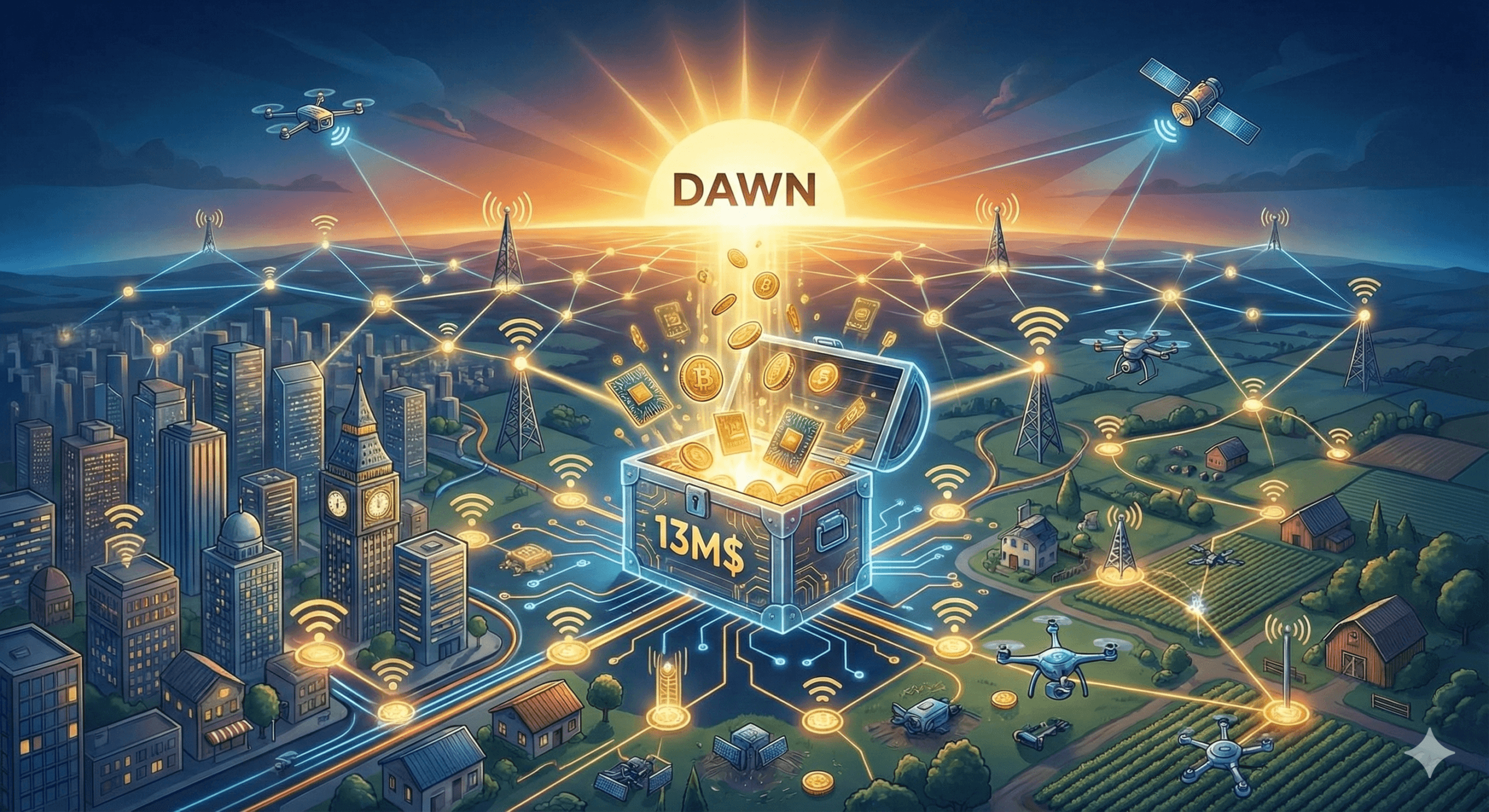
The impact of DAWN’s funding on the development of broadband infrastructure
With a significant investment of $13 million, DAWN manages to considerably boost the development of decentralized broadband infrastructure, facilitating internet access in rural and marginalized areas. This funding not only provides resources for the physical expansion of networks but also for innovative technologies that reduce operational costs, increase data transfer speeds, and enhance connection security. Supported projects:
- Installation of network nodes in isolated communities
- Implementation of decentralized solutions for traffic management
- Creation of a resilient infrastructure through blockchain technologies
In addition to these tangible benefits, the social impact is particularly important: communities benefit from more robust connectivity that supports digital education, local businesses, and electronic public services. Below is a table illustrating the estimated increase in broadband coverage by 2025, thanks to DAWN’s funding:
| Year | Broadband Coverage (%) | Served Communities |
|---|---|---|
| 2023 | 45% | 120 |
| 2024 | 62% | 190 |
| 2025 | 80% | 250 |
Innovative technologies in decentralized broadband networks promoted by DAWN
Among the key technologies promoted by DAWN are:
- Self-organizing peer-to-peer networks, which intelligently optimize traffic and resource allocation;
- Adaptive Mesh Protocol, which ensures stable connections even in dynamic networks;
- Advanced cryptography systems, guaranteeing data confidentiality and integrity.
| Technology | Main Benefits | Network Impact |
|---|---|---|
| Blockchain | Transparency and security | Eliminates centralized weak points |
| Mesh Networking | Flexibility and fault tolerance | Robust and extended connections |
| Advanced Cryptography | Protection of sensitive data | Increased user trust |
Investor involvement and market perspective in the context of recent funding
Investors have enthusiastically responded to the DAWN initiative, reflecting the growing confidence in the potential of decentralized broadband networks. The alignment of financial interests with the technological mission of the platform has attracted both venture capital and strategic investors from the telecommunications sector. In this context, recent agreements denote a:
- Strong support for innovation, highlighting that decentralization is no longer a mere theoretical idea but a scalable and widely applicable model;
- Ongoing interest in disruptive solutions, which can fundamentally reshape the way data is transmitted and consumed;
- Commitment to global expansion, opening opportunities for emerging markets and reducing gaps in internet access.
From a market perspective, recent funding raises a series of encouraging signals for industry players. In addition to strengthening DAWN’s influence in the broadband ecosystem, it also suggests a recalibration of traditional strategies oriented towards centralization. The market reacts to change through:
- Increased value of startups demonstrating decentralized potential;
- Accelerated adoption of blockchain and edge computing technologies in broadband infrastructure;
- Diversification of funding channels for technology projects with major social and economic impact.
Challenges and opportunities in expanding decentralized broadband networks
In the process of expanding decentralized broadband networks, technical and operational challenges are numerous and complex. One of the most significant difficulties is ensuring stability and security in a framework without a central authority, an essential aspect for maintaining user trust and data integrity. Additionally, integrating diverse equipment with varying standards can complicate the uniform implementation of services, especially in rural or underdeveloped areas. Furthermore, the infrastructure requires intelligent resource management to optimize bandwidth and energy usage, thus ensuring consistent performance and long-term sustainability.
On the other hand, the opportunities associated with these networks are equally remarkable. By adopting a decentralized architecture, one can benefit from extensive scalability, allowing for the easy addition of new nodes without major costs or bottlenecks. Moreover, this structure promotes better resilience against failures and cyberattacks, due to distributed redundancy. Additionally, local communities can become active players in the development and maintenance of the infrastructure, fostering innovation and creating new economic opportunities. Here are some standout advantages:
- Reduction of operational costs through the use of distributed resources
- Improved access in isolated or disadvantaged areas
- Increased transparency and democratization of infrastructure
Recommendations for the efficient integration of new resources into connectivity projects
To maximize the funding obtained, it is essential to implement clear strategies that ensure a rapid and efficient integration of new resources into decentralized broadband projects. Optimizing resource allocation involves prioritizing initiatives with the greatest social and economic impact, using scalable technologies that are adaptable to specific local conditions. Additionally, close collaboration between developers, local authorities, and communities facilitates customized solutions that enhance adoption and long-term sustainability.
Another crucial recommendation is to implement continuous monitoring and evaluation systems to track network performance and quickly identify potential necessary adjustments. In this regard, flexible planning that allows for real-time adjustments of objectives and resources is vital. Below, you will find a summarized example of the key steps for successful integration:
| Step | Description | Expected Outcome |
|---|---|---|
| Assessment of local needs | Identifying specific community requirements and limitations | Customized plan focused on impact |
| Strategic allocation of resources | Prioritizing projects with maximum potential | Efficient use of funds |
| Collaboration and partnerships | Engaging stakeholders | Increased acceptability and sustainability |
| Continuous monitoring | Periodic evaluation and adjustments | Constant improvement of performance |
Key takeaways
As technology advances and the need for fast and secure connectivity becomes increasingly pressing, initiatives like DAWN show us that the future of the internet is decentralized and accessible to all. With $13 million in funding, the project not only expands its broadband networks but also lays the groundwork for a democratized digital infrastructure. It remains to be seen how this investment will transform the telecom landscape globally, but one thing is clear: DAWN is writing a new chapter in the story of modern connectivity.