

In practice, a Bitcoin wallet or a cryptocurrency wallet is software used to store, send, and receive Bitcoin. Most people already have a physical wallet where they store banknotes or coins, and a Bitcoin wallet or a cryptocurrency wallet, in general, has the same basic functions.
Instead of storing money physically, a Bitcoin wallet stores the key with which you sign when you make a transaction and provides an interface that allows you to access cryptocurrencies.
Modern wallets are designed to abstract the entire process and are so easy to use that anyone who can read can use them.
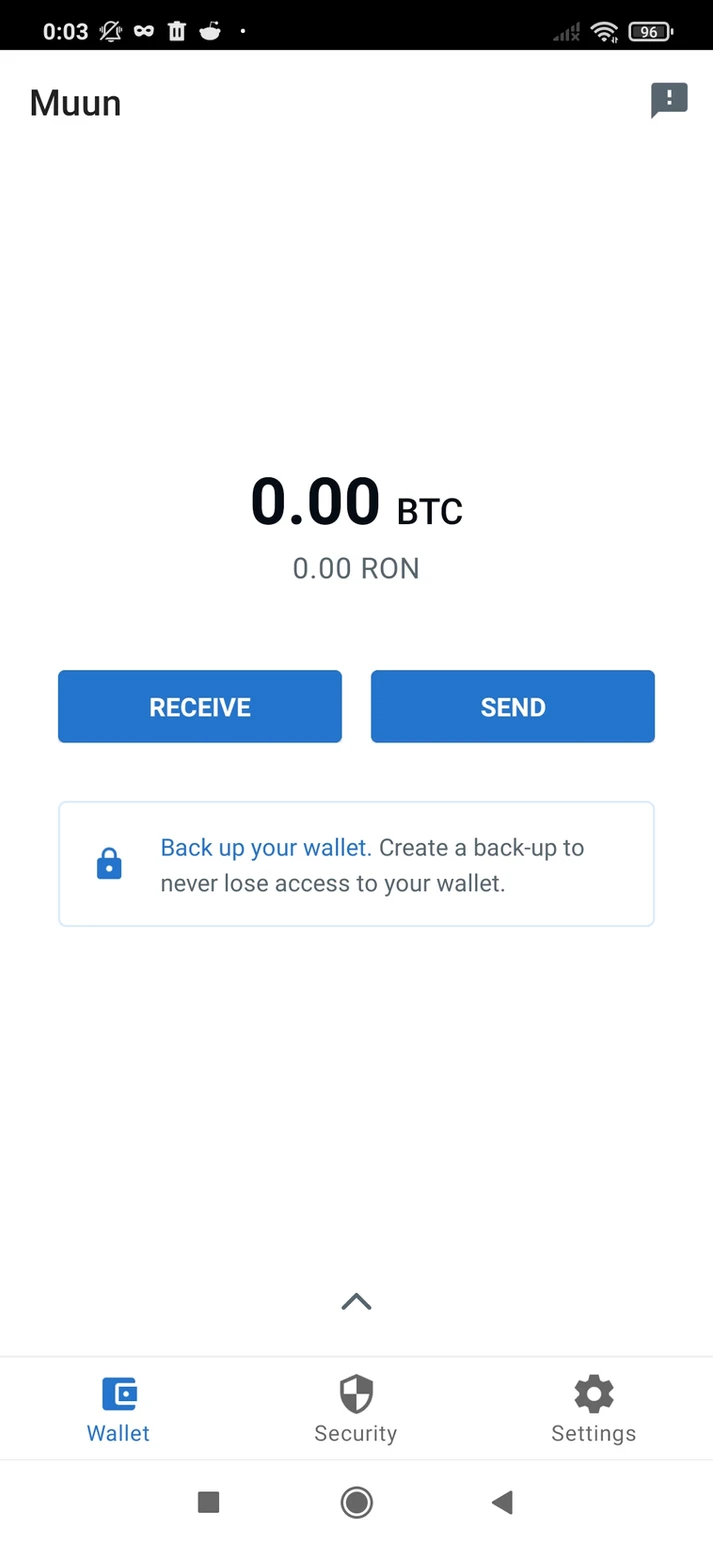
In the image above, we have the interface of the Munn Wallet. Here we have two buttons: “Receive” – press this option if you want to receive Bitcoin from someone. Once you press this button, an address will be generated that you can share to receive Bitcoin. The next option, “Send”, is used when you want to send Bitcoin to someone.
For example, if Mihai needs to send Flavia the amount of 0.05 BTC, Flavia will press “Receive”, and the generated address will be sent to Mihai, who will press “Send”, enter the address received from Flavia, and write the amount of 0.05 BTC.
What is a bitcoin wallet? Essential information:
A Bitcoin wallet is software that helps you store, send, and receive Bitcoin.
A wallet stores the key with which you sign transactions. Anyone who holds this key can use the coins associated with the wallet.
There are several types of wallets, each with different features.
The first Bitcoin wallet was that of Satoshi Nakamoto, who created the Bitcoin cryptocurrency. The second Bitcoin wallet belonged to Hal Finney, who communicated with Nakamoto and was the second person to run a Bitcoin node. The first transaction between two Bitcoin wallets occurred between them when Nakamoto sent 10 Bitcoin to Finney.
Warning!
Do not give anyone your private keys or seed words of your wallet. Please be very careful with your confidential data.
How does a Bitcoin wallet work?
Cryptocurrency wallets are software applications on computers or mobile devices such as phones or tablets. They use the internet connection to access the blockchain of the cryptocurrency they use.
If Mihai sends 0.05 BTC to Flavia, Mihai’s wallet will connect to the Bitcoin blockchain and send the transaction to the Bitcoin network.

To send or receive Bitcoin, we use these applications called Bitcoin wallets or Bitcoin wallets. Above is the process that must be completed to send Bitcoin. After reading the text up to this point, you probably know what a wallet is. Continue the article to find out what types of wallets exist.
Types of wallets
There are two main categories of wallets: custodial and non-custodial. Custodial wallets, also known as online wallets, are hosted on the servers of the digital wallet provider (most often a cryptocurrency exchange). Non-custodial wallets are wallets where you take responsibility for securing your keys. This type of wallet is most commonly found on mobile devices (Munn Wallet, Mycelium)
Wallets or cryptocurrency wallets can be
Hot wallet (wallet connected to the internet)
Cold wallet (wallet not connected to the internet)
These wallets are used to store the private key with which you sign transactions associated with your account. You can store private keys on a software application, on hardware (most commonly on a stick), or on a piece of paper (paper wallets).
If you want to install a wallet on your phone and don’t know how, we recommend reading our article “How to create a Bitcoin wallet?”.

Software Wallets
Software wallets refer to wallets installed on computers or mobile devices. These wallets are useful because they have an interface that you can access anytime, you can make transactions, you can see your wallet balance, and much more.
Software wallets are also divided into two main categories: hot wallets and cold wallets.
Hot wallets are permanently connected to the internet, making them very convenient for quick transactions but more vulnerable to cyber attacks. Examples include mobile or desktop wallets like Exodus, Trust Wallet, and Atomic Wallet. They allow you quick access to funds, but you need to be careful about the security of the device you install them on.
Cold wallets, on the other hand, are considered much safer because they are disconnected from the internet when not in use. The most popular forms are hardware wallets, such as Ledger or Trezor, which store private keys on a physical device. This minimizes the risk of malware or hacking attacks. There are also paper wallets, which store private keys on paper. These are very secure in terms of digital security but vulnerable to physical damage or loss.
Hardware Wallets
Hardware wallets are considered one of the most secure options for storing cryptocurrencies. These are physical devices, usually small, that store private keys offline. For example, Ledger Nano S and Trezor One are highly used hardware wallets due to their enhanced security. They operate offline and only connect temporarily to a computer or smartphone when you make a transaction.
Paper Wallets
Paper wallets are simply pieces of paper on which your private and public keys are written. They are 100% offline, so the risk of being hacked is eliminated. However, the physical security of the paper wallet is critical – you must avoid damage or loss.
Other articles that might help you
If you want to learn more about Bitcoin wallets, you can also read the articles posted on the website https://learnmeabitcoin.com/. Here you will find a lot of valuable information. The author of the website, Gregory Walker, is extremely well-known in the Bitcoin community, and the mentioned website is highly appreciated for presenting complex concepts in an easy-to-understand way.
Another website that offers valuable information regarding Bitcoin is https://blog.btc.com/, where you can find both technical articles and news from the Bitcoin community.
If you have made a Bitcoin transaction and don’t know what stage it is in, we invite you to use a Blockchain explorer. On this explorer, you can search the address where you made the transaction and check if the transaction has been confirmed. Our recommendation is https://blockchair.com/