

What is BNB?
BNB is the native cryptocurrency of the Binance ecosystem, one of the largest cryptocurrency trading platforms in the world. Initially launched under the name Binance Coin, the coin was created to offer users benefits such as discounts on trading fees and access to various services within the Binance ecosystem.
Over time, the role of BNB has expanded significantly. Today, the cryptocurrency is used for transaction fee payments on BNB Chain, staking, participating in decentralized applications (dApps), and other activities in the decentralized finance (DeFi) sector.

BNB was initially launched as a token on the Ethereum blockchain, but later migrated to its own blockchain infrastructure developed by Binance. This evolution has contributed to transforming BNB into one of the most important cryptocurrencies in the industry.
In this article, you will learn how BNB appeared, how it works, its connection with the BEP-20 standard, and its main uses in the Binance ecosystem.
How did BNB appear?
BNB (Binance Coin) was launched in July 2017 by Binance, one of the largest cryptocurrency trading platforms in the world. At the time of launch, BNB was created as an ERC-20 token, operating on the Ethereum blockchain. Behind the project was Changpeng Zhao (known as CZ), the entrepreneur who founded Binance. Under his leadership, Binance quickly became the largest cryptocurrency exchange in the world by trading volume.
The cryptocurrency was introduced through an initial coin offering (ICO), conducted before the official launch of the Binance platform. During the ICO, 200 million BNB tokens were issued, some being distributed to investors, and the rest allocated to the Binance team and ecosystem development.
The initial purpose of BNB was relatively simple: users who held the coin could benefit from discounts on trading fees charged by Binance. As the platform developed, the utility of the token increased considerably, and BNB became one of the most important cryptocurrencies in the industry.
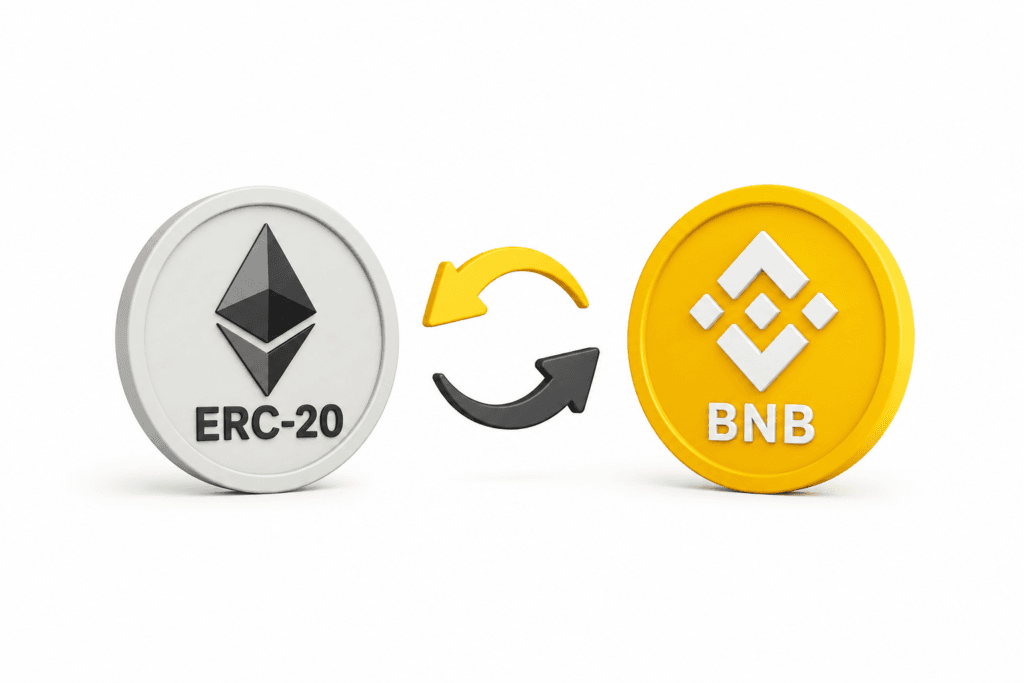
An important moment in the project’s evolution occurred in 2019, when Binance launched its own blockchain, called Binance Chain. Following this launch, BNB migrated from the Ethereum network to the infrastructure developed by Binance, becoming the native currency of the new ecosystem. To achieve this migration, users went through a process known as token swap, where the old ERC-20 tokens were replaced with the new native tokens of the Binance Chain network.
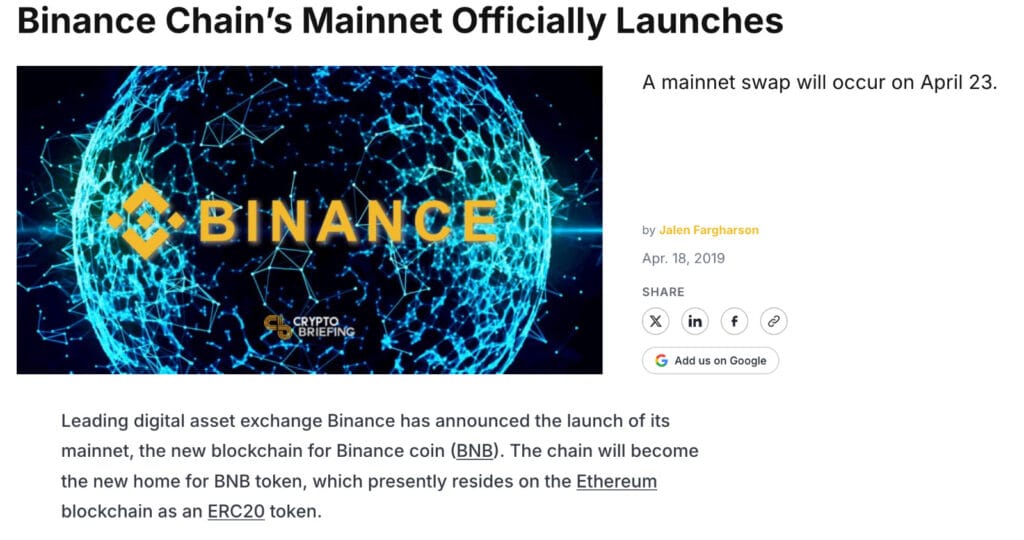
Today, BNB is used for much more than paying trading fees, being an essential element of the BNB Chain ecosystem and the numerous applications built on this blockchain infrastructure.
From ERC-20 to BNB Chain: the evolution of the Binance ecosystem
When it was launched in 2017, BNB functioned as an ERC-20 token on the Ethereum blockchain. This approach allowed the Binance team to quickly launch the project and benefit from the existing infrastructure of the Ethereum network.
In 2019, Binance launched its own blockchain, called Binance Chain, and BNB tokens were migrated from Ethereum to the new network. The main purpose of Binance Chain was to offer fast transactions and low costs for platform users.
A year later, in 2020, Binance launched Binance Smart Chain (BSC), a blockchain network compatible with Ethereum and designed to support smart contracts and decentralized applications (dApps). This launch contributed to the development of a vast ecosystem of DeFi projects, NFTs, and blockchain applications.
Currently, the two networks have evolved into an ecosystem known as BNB Chain, and BNB represents the native currency used for transaction fee payments and interaction with applications built on this infrastructure.
On BNB Chain, most tokens use the BEP-20 standard, the equivalent of the ERC-20 standard on the Ethereum network.
How does BNB Chain work?
BNB Chain uses a consensus mechanism known as Proof of Staked Authority (PoSA). It combines elements of Proof of Stake (PoS) and Proof of Authority (PoA) mechanisms, aiming to offer fast transactions and low costs.
In this system, validators are selected based on the coins staked and their reputation in the network. This model allows processing a large number of transactions in a short time and helps maintain lower fees compared to other blockchains.
Why has BNB Chain become popular?
The popularity of BNB Chain increased significantly during 2020-2021, when the usage costs of the Ethereum network rose considerably. During that period, many users and developers sought alternatives that offered faster transactions and lower fees.
BNB Chain stood out for its low fees and compatibility with the Ethereum Virtual Machine (EVM), allowing developers to migrate existing applications with minimal changes. This contributed to the emergence of an extensive ecosystem of DeFi applications, NFTs, and blockchain games.
What is BNB used for?
Although BNB was initially created to offer discounts on trading fees on Binance, its utility has expanded considerably over the years. Currently, BNB is used in numerous services and applications within the Binance and BNB Chain ecosystem.
Transaction fee payments on BNB Chain
One of the most important uses of BNB is the payment of transaction fees on BNB Chain. Similar to how ETH is used for fee payments on Ethereum, users buy BNB to make transfers and interact with applications built on this network.
A common example is users who hold USDT on the BNB Chain blockchain. Even if they send USDT, network fees are paid in BNB. In other words, the user transfers USDT, but consumes a small amount of BNB to cover the transaction cost.
Discounts on trading fees
BNB holders can benefit from discounts on certain fees charged by the Binance platform. This was one of the main reasons the coin was created and continues to be an advantage for active users of the ecosystem.
Participation in DeFi applications
BNB is used in numerous applications in the decentralized finance (DeFi) sector. Users can lend, trade, or provide liquidity using assets built on BNB Chain, without needing intermediaries like banks or traditional financial institutions.
For example, a user who holds BNB and USDT can deposit these assets into a liquidity pool on a DeFi platform and receive rewards for their contribution. In other situations, investors can use BNB as collateral to borrow other cryptocurrencies or access various financial services available on BNB Chain.
Staking
BNB holders can lock their coins to participate in the network validation process and earn rewards. This process is known as staking and is one of the most popular methods for investors to generate passive income from cryptocurrencies.
Participation in new project launches
BNB is frequently used for participation in Binance Launchpad and Launchpool programs, through which users can gain access to early-stage blockchain projects. Many of the projects launched through Binance Launchpad have been organized as IEOs (Initial Exchange Offerings), a funding model where token sales are managed by a cryptocurrency exchange.
BNB Burn Mechanism
One of the elements that differentiate BNB from many other cryptocurrencies is its burn mechanism. This represents the process by which a portion of the coins in circulation are permanently removed from supply.
At the project’s launch, 200 million BNB coins were created. Binance aims to gradually reduce this supply to 100 million coins through a periodic burn program.
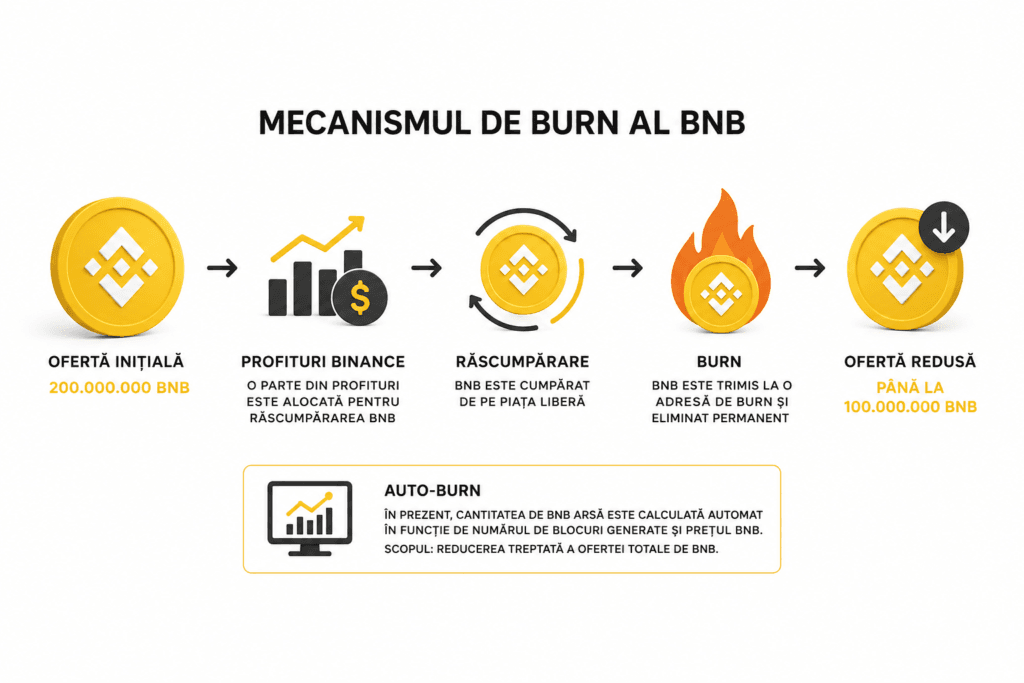
In the past, Binance conducted these operations using a portion of the profits generated by the platform to buy back and destroy BNB tokens. Currently, the ecosystem uses a mechanism called Auto-Burn, which automatically calculates the amount of BNB to be removed from circulation based on parameters such as the number of blocks generated and the coin’s price.
The purpose of this mechanism is the gradual reduction of the total BNB supply. In theory, a reduced supply can help maintain the asset’s rarity, but the price of a cryptocurrency continues to be influenced by numerous factors, including market demand and the overall evolution of the ecosystem.
Advantages and Disadvantages of BNB
Like any cryptocurrency, BNB presents both advantages and risks. Before investing or using this coin in the Binance ecosystem, it is important to understand both its strengths and its limitations.
Advantages of BNB
Real utility in the Binance ecosystem
BNB is not just a speculative asset. The coin is used for transaction fee payments on BNB Chain, participating in staking, accessing certain Binance programs, and interacting with numerous DeFi applications.
Extensive ecosystem
BNB benefits from one of the largest ecosystems in the crypto industry. Thousands of applications, tokens, and services use the BNB Chain infrastructure.
Low transaction fees
Compared to other popular blockchains, BNB Chain generally offers low transaction fees and fast processing times.
Burn mechanism
The burn program contributes to the gradual reduction of the total BNB supply, an aspect followed by many investors when analyzing the project’s tokenomics.
Disadvantages of BNB
Dependence on the Binance ecosystem
A large part of BNB’s utility and popularity is closely tied to the success of the Binance ecosystem and BNB Chain.
Strong competition
Although BNB is one of the most important cryptocurrencies in the industry, it competes with other major blockchain ecosystems such as Ethereum, Solana, Avalanche, and Tron. Each of these networks tries to attract users, developers, and projects through features like transaction speed, low costs, or decentralization degree.
For example, Ethereum is the market leader in terms of decentralized applications and smart contracts, while Solana is known for its high transaction processing speed. Tron is noted for its low fees and frequent use for stablecoin transfers, while Avalanche focuses on scalability and infrastructure flexibility.
The long-term success of BNB also depends on the ability of the BNB Chain ecosystem to remain competitive in an ever-evolving industry.
Volatility
Like most cryptocurrencies, the price of BNB can experience significant fluctuations over a relatively short period. Although BNB is one of the largest cryptocurrencies in the industry by market capitalization, its value is influenced by investor sentiment, the evolution of the crypto market, and the development of the Binance ecosystem.
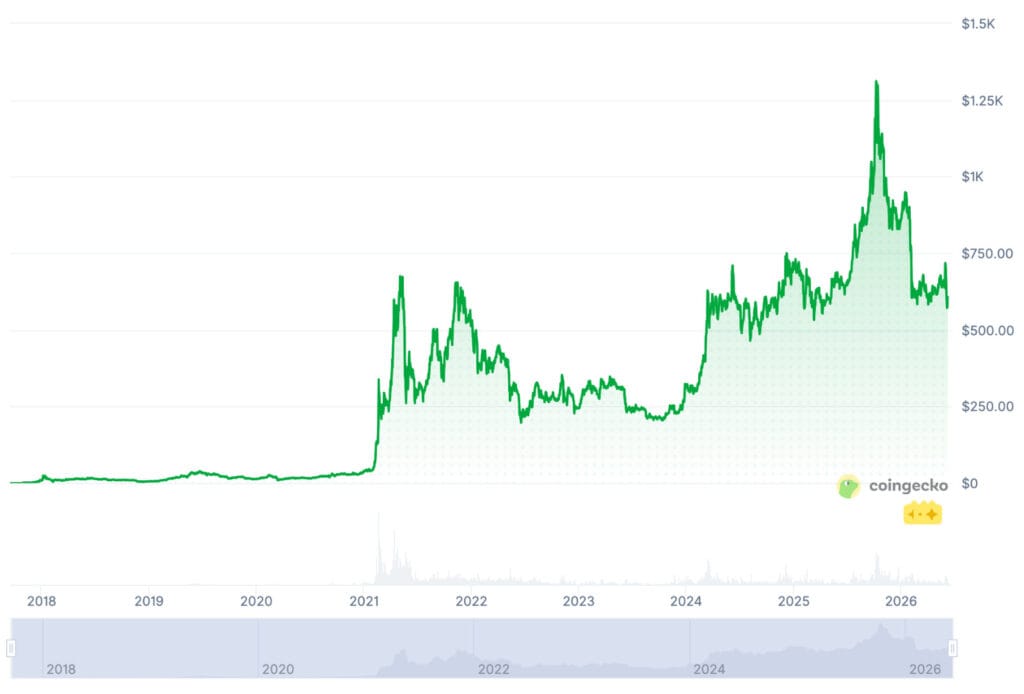
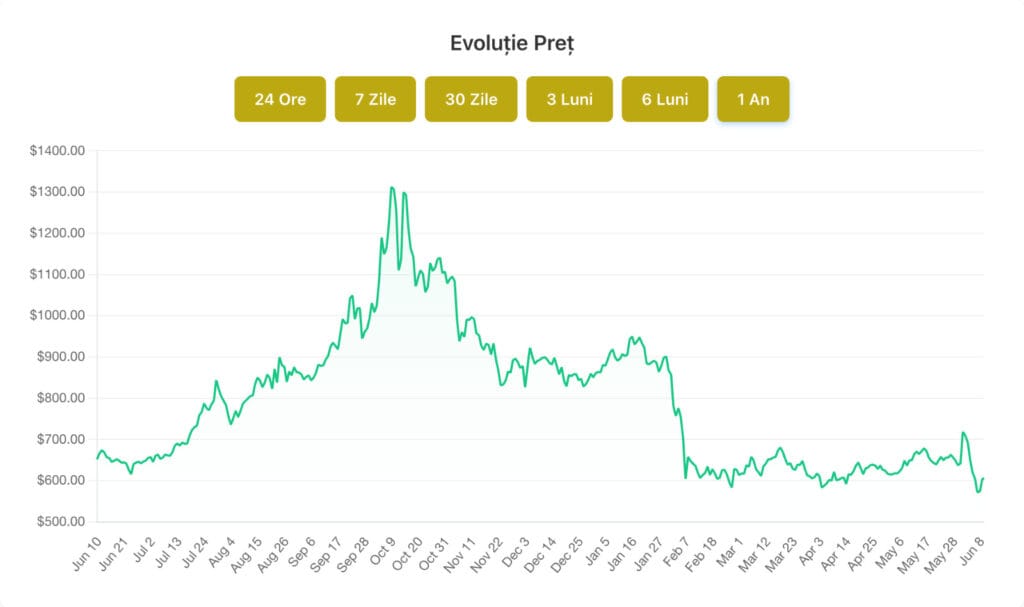
The chart below illustrates the price evolution of BNB from June 2025 to June 2026. During this interval, the coin experienced both periods of accelerated growth and significant corrections. On October 13, 2025, BNB reached an all-time high of 1,369.99 USD, demonstrating the high level of volatility specific to digital assets.
Regulatory risks
Like other cryptocurrencies, BNB is influenced by the evolution of the regulatory framework in different jurisdictions. Regulatory changes can affect both the activity of trading platforms and the use of certain services in the crypto ecosystem.
In the European Union, the MiCA (Markets in Crypto-Assets) regulation introduces a set of common rules for the digital asset industry. Although its purpose is to increase transparency and consumer protection, the implementation of new compliance requirements can influence how certain crypto services and projects operate in the European market.
For this reason, investors should monitor both the evolution of the BNB Chain ecosystem and legislative changes that may impact the cryptocurrency industry as a whole.
Conclusion
BNB has evolved considerably since its launch in 2017 as an ERC-20 token on the Ethereum blockchain. Today, the cryptocurrency represents the central element of the BNB Chain ecosystem and is used for transaction fee payments, staking, participating in DeFi applications, and accessing various services developed by Binance.
Over the years, Binance has built one of the largest blockchain ecosystems in the industry, and BNB has become one of the most important cryptocurrencies by market capitalization. The launch of Binance Chain, the emergence of BNB Smart Chain, and the development of the BEP-20 standard have contributed to the expansion of the coin’s utility and its global adoption.
However, like any digital asset, BNB is exposed to market volatility and regulatory changes. Before investing, it is important to understand both the role this cryptocurrency plays in the Binance ecosystem and the risks associated with the crypto market.
Who created BNB?
BNB was created by Binance and launched in 2017 through an ICO (Initial Coin Offering). The project was coordinated by Changpeng Zhao (CZ), the founder of Binance, one of the largest cryptocurrency trading platforms in the world.
What is BNB Chain?
BNB Chain is the blockchain infrastructure that supports the BNB ecosystem. The network allows users to perform transactions, use decentralized applications (dApps), participate in staking, and interact with various services in the decentralized finance (DeFi) sector.
What is the difference between BNB and Bitcoin?
Bitcoin was primarily created as a form of digital money and a store of value. In contrast, BNB is a utility cryptocurrency used within the Binance and BNB Chain ecosystem for transaction fee payments, staking, and access to various blockchain services.
What is the BEP-20 standard?
BEP-20 is the standard used for creating tokens on BNB Chain. It is similar to the ERC-20 standard on the Ethereum network and establishes the rules that tokens must follow to be compatible with wallets, applications, and services in the ecosystem.
Is BNB a deflationary cryptocurrency?
BNB uses a periodic token burn mechanism through which a portion of the coins in circulation are permanently removed. This process reduces the total BNB supply over time and is one of the important elements of the project’s economic model.
Can I buy fractions of BNB?
Yes. It is not necessary to buy a whole BNB coin. Like most cryptocurrencies, BNB can be purchased in fractions, allowing investors to buy according to their available budget.
What is BNB used for?
BNB is used for transaction fee payments on BNB Chain, staking, participating in DeFi applications, accessing Binance Launchpad and Launchpool programs, as well as for various other services available in the Binance ecosystem.