A hot wallet is a cryptocurrency wallet that is connected to the internet. It gives you instant access to your funds and makes sending and receiving crypto quick and easy — but because it’s always online, it carries a higher security risk than an offline cold wallet.
What Is a Hot Wallet?
A hot wallet is a digital wallet that stores your cryptocurrency and remains connected to the internet at all times. This constant connectivity is what makes it “hot” — always on, always accessible, ready to send or receive funds instantly.
Hot wallets store your private keys in an internet-connected environment. That means you can access your crypto from anywhere — but it also means those keys are potentially exposed to online threats.
Simple analogy: Think of a hot wallet like a physical wallet you carry in your pocket. It’s convenient — you always have cash on hand for everyday purchases. But because it’s with you all the time, there’s a higher chance of losing it or having it stolen. A cold wallet, by contrast, is more like a safe at home — less convenient but much harder to access by anyone other than you.
How Does a Hot Wallet Work?
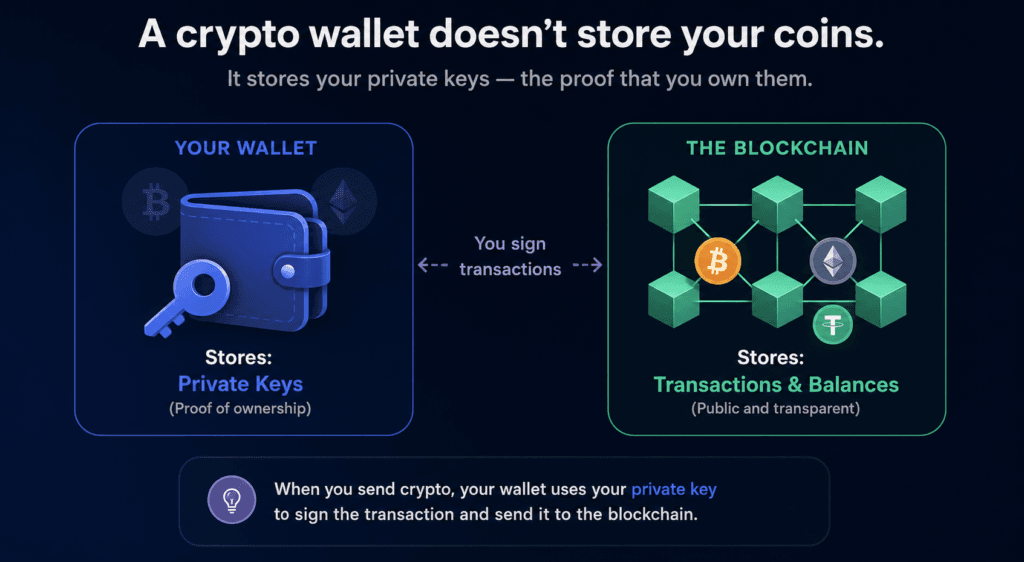
A common misconception is that a crypto wallet “stores” your coins. It doesn’t — your cryptocurrency exists on the blockchain. What a hot wallet actually stores are your private keys — the cryptographic proof that you own and control those funds.
what is a hot wallet?
When you send crypto, your hot wallet uses your private key to sign the transaction and broadcast it to the blockchain network. Because the wallet is online, this all happens in seconds.
Step 1 — You initiate a transaction
You enter the recipient’s wallet address and the amount you want to send.
Step 2 — The wallet signs the transaction
Your hot wallet uses your private key to create a digital signature — proving you authorised the transfer without revealing the key itself.
Step 3 — The transaction is broadcast
The signed transaction is sent to the blockchain network, where it is verified by validators or miners.
Step 4 — Confirmation
Once confirmed and added to a block, the transfer is complete and irreversible.
Types of Hot Wallets
Hot wallets come in several forms, each suited to different use cases and levels of technical experience.
🌐 Web Wallets
Wallets hosted by an online service — typically a cryptocurrency exchange. You access them through a web browser. They are extremely convenient for quick trading but your private keys are stored on someone else’s server. If the platform is hacked, your funds may be at risk. Examples: wallets on Binance, Coinbase, Kraken.
📱 Mobile Wallets
Apps installed on your smartphone. Ideal for everyday use, quick payments and checking your balance on the go. You typically control your own private keys. Examples: Trust Wallet, MetaMask (mobile), Exodus. Most mobile wallets generate a seed phrase during setup — back it up immediately.
🖥️ Desktop Wallets
Software installed directly on your computer. Offers more control over your private keys than web wallets, since keys are stored locally rather than on a third-party server. Security depends on the health of your operating system — malware or viruses can still compromise them. Examples: Exodus (desktop), Electrum (Bitcoin only), MetaMask (browser extension).
Advantages of a Hot Wallet
⚡
Instant access
Send and receive crypto anytime, from anywhere. No physical device needed — just an internet connection.
🆓
Free to use
Most hot wallets are completely free to download and set up. There are no upfront hardware costs — unlike cold wallets which can cost €50–€200.
🖱️
Easy to use
Designed for everyday users. Setup takes minutes and most interfaces are intuitive enough for complete beginners.
🔗
DeFi compatible
Hot wallets like MetaMask connect directly to DeFi protocols, NFT platforms and Web3 applications — something cold wallets cannot do as easily.
Disadvantages of a Hot Wallet
The convenience of a hot wallet comes with trade-offs. Because private keys are stored in an internet-connected environment, they are exposed to a wider range of threats.
⚠️ Cyberattacks
Hacking, phishing and malware are the main threats. A phishing attack tricks you into entering your credentials on a fake website. Malware can silently monitor your clipboard and replace a copied wallet address with one belonging to an attacker — a particularly dangerous threat when sending crypto.
⚠️ Platform vulnerabilities (web wallets)
If your crypto is stored on an exchange wallet, you are trusting that platform with your private keys. Exchange hacks, insolvencies or regulatory freezes can prevent you from accessing your funds. The collapse of FTX in 2022 is the clearest example of this risk.
⚠️ Loss of seed phrase
If you lose your seed phrase and your device is lost, stolen or broken, you permanently lose access to your funds. There is no password reset, no customer support that can recover them. This is not a platform limitation — it’s how blockchain works.
Rule #1: Never store your seed phrase digitally — no photos, no cloud storage, no email drafts. Write it down on paper and keep it somewhere physically secure. Anyone who has your seed phrase has full access to your wallet.
Hot Wallet vs Cold Wallet
The fundamental difference is connectivity. A hot wallet is always online. A cold wallet stores your private keys offline — on a physical hardware device that only connects to the internet when you plug it in to make a transaction.
🔥 Hot Wallet
🧊 Cold Wallet
Internet connection
Always online
Offline by default
Security level
Medium
Very high
Cost
Free
€50–€200
Ease of use
Very easy
Moderate
DeFi / Web3 access
Yes
Limited
Best for
Frequent transactions, small amounts
Long-term storage, large amounts
Best practice: Many experienced crypto users combine both. They keep a small amount in a hot wallet for regular transactions and transfers, and store the bulk of their holdings in a cold wallet for long-term security.
When Should You Use a Hot Wallet?
Hot wallets are the right tool in specific situations. The key is matching the wallet type to how you actually use your crypto.
You’re using a crypto ramp (Abarai, MoonPay, Paybis)
✗ Consider a cold wallet when
You’re holding a significant amount long-term
You don’t need frequent access to your funds
Security is your top priority
You’ve had a hot wallet compromised before
Frequently Asked Questions
What is a hot wallet in crypto?
A hot wallet is a cryptocurrency wallet that stores your private keys in an internet-connected environment. It allows you to send and receive crypto instantly, from any device with an internet connection.
Is a hot wallet safe?
Hot wallets are safe for everyday use with small amounts. They carry more risk than cold wallets because the private keys are stored online — making them vulnerable to hacking, phishing and malware. For large holdings or long-term storage, a cold wallet is strongly recommended.
What is the difference between a hot wallet and a cold wallet?
The key difference is connectivity. A hot wallet is always online — convenient but more exposed to threats. A cold wallet stores private keys offline on a physical device and only connects briefly when signing a transaction. Cold wallets are significantly harder to hack remotely.
Can I lose my crypto if my hot wallet is hacked?
Yes — if an attacker gains access to your private keys or seed phrase, they can drain your wallet completely. Crypto transactions are irreversible — there is no way to recover funds sent to an attacker’s address. This is why protecting your seed phrase is critical.
What are examples of hot wallets?
Popular hot wallets include MetaMask (browser extension and mobile, best for Ethereum and EVM networks), Trust Wallet (mobile, multi-chain), Exodus (desktop and mobile, 260+ assets) and Phantom (Solana-focused). Exchange wallets on platforms like Binance or Coinbase are also technically hot wallets, though in that case the platform holds your private keys.
Do I need a hot wallet to buy crypto?
Not necessarily. You can buy crypto through an exchange and keep it there (custodial). However, if you want full control over your funds — meaning you hold the private keys — you need either a hot wallet or a cold wallet. A hot wallet is the easiest starting point for most beginners.