

Introduction
Shiba Inu (SHIB) is one of the most popular meme cryptocurrencies in the world, and with growing adoption, more and more questions have arisen regarding the secure storage of SHIB tokens.
Many users buy Shiba Inu from exchanges or through crypto ramps, but few understand the difference between holding cryptocurrencies on a platform and keeping them in a personal wallet.
This is where the concept of a crypto wallet comes into play.
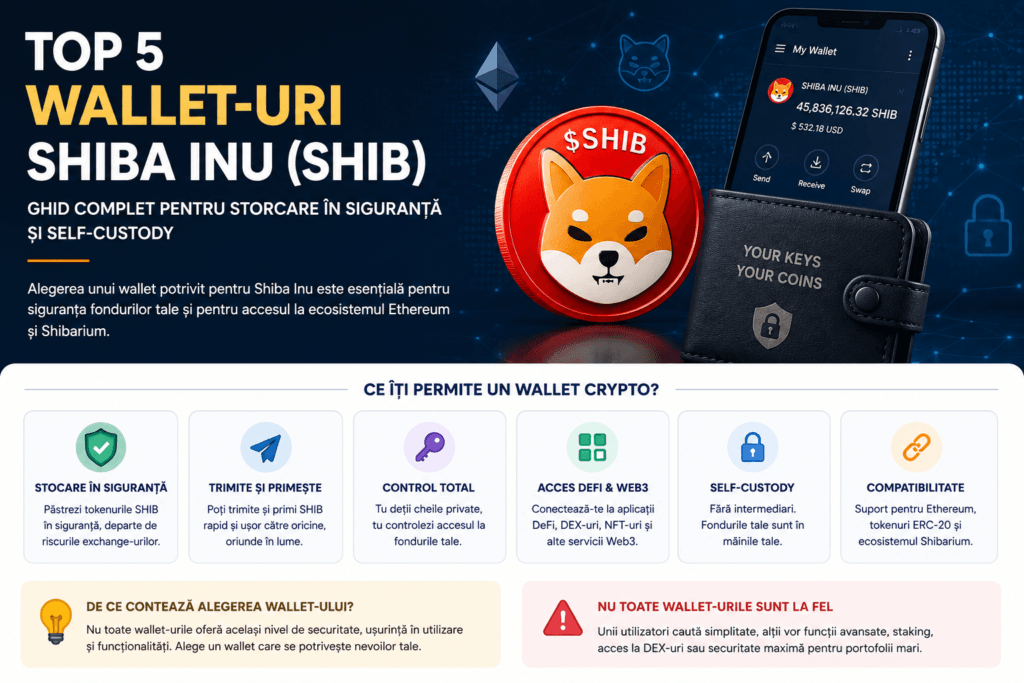
A crypto wallet allows you to:
-securely store SHIB;
-send and receive tokens;
-control your private keys;
-access DeFi and Web3 applications;
-use self-custody;
-interact with the Ethereum and Shibarium ecosystem.
Choosing the right wallet for Shiba Inu is important because not all wallets offer the same level of:
-security;
-ease of use;
-compatibility;
-control over funds;
-DeFi and Web3 features.
Some users look for a simple wallet for occasional SHIB purchases.
Others want:
-staking;
-access to decentralized applications;
-connecting to DEXs;
-advanced security;
-long-term storage for large portfolios.
Additionally, because SHIB is an ERC-20 token built on the Ethereum blockchain, the chosen wallet must be compatible with the Ethereum ecosystem and, ideally, with recent developments surrounding Shibarium.
In this guide, we analyze the best wallets for Shiba Inu in detail and explain:
-what the differences are between a hardware wallet and a software wallet;
-which wallet is suitable for beginners;
-which wallet advanced users prefer;
-how self-custody works;
-how to protect your SHIB tokens;
-what the advantages and disadvantages of each option are.
Whether you are holding SHIB for the first time or already have crypto experience, choosing a good wallet can make the difference between a simple, secure experience and a complicated, risky one.
What should a good Shiba Inu wallet have?
Before choosing a wallet for SHIB, it is important to understand that not all crypto wallets are built the same.
Some are oriented towards:
-simplicity and quick use;
-maximum security;
-access to DeFi and Web3 applications;
-long-term storage;
-active trading and integration with exchanges.
A user who occasionally buys SHIB might need a simple and intuitive wallet.
In contrast, someone who uses:
-DEXs;
-staking;
–NFTs;
-Web3 applications;
-DeFi protocols;
will need more advanced features and extensive compatibility with the Ethereum ecosystem.
Since Shiba Inu is an ERC-20 token built on the Ethereum blockchain, a good wallet must offer full compatibility with:
-Ethereum;
-ERC-20 tokens;
-the Shibarium ecosystem;
-modern Web3 applications.
1. Self-custody and control of private keys
One of the most important features is self-custody.
A good wallet for SHIB must give you complete control over:
-your private keys;
-your seed phrase;
-your funds.
In the crypto ecosystem, there is a very popular expression:
“Not your keys, not your coins.”
This means that when cryptocurrencies are kept on a centralized exchange, real control over the funds belongs to that platform.
Many users choose to move their SHIB to personal wallets precisely to have direct control over their assets.
2. Compatibility with the Ethereum ecosystem
SHIB operates on Ethereum, which means the chosen wallet must support the ERC-20 standard.
In practice, this allows:
-sending and receiving SHIB tokens;
-connecting to DeFi applications;
-using DEXs;
-interacting with Web3 applications;
-using the Shibarium ecosystem.
Some wallets offer limited support for certain networks, which is why compatibility is extremely important.
3. High security
The safety of funds is probably the most important criterion.
A good wallet for Shiba Inu should include:
-passwords and biometric authentication;
-backup via seed phrase;
-restoration capabilities;
-protection against unauthorized access;
-support for hardware wallets.
For users holding large amounts of SHIB, hardware wallets are considered the most secure option because they keep private keys offline.
4. Ease of use
Many new users choose SHIB as their first cryptocurrency, and the wallet experience matters a lot.
An intuitive wallet should allow:
-fast token sending;
-simple balance viewing;
-quick backup;
-easy connection to Web3 applications;
-use without advanced technical knowledge.
Overly complex wallets can cause confusion and lead to costly mistakes.
5. Integration with the crypto ecosystem
A modern wallet is not used just for storage.
Many users use it for:
-staking;
-crypto swaps;
-connecting to DEXs;
-NFTs;
-DeFi applications;
-Web3 protocols.
For this reason, wallets compatible with the Ethereum ecosystem and decentralized applications are usually preferred by active users.
How do users buy SHIB before moving it to a wallet?
In most cases, users buy SHIB through:
-crypto exchanges;
-crypto ramps;
-fintech platforms compatible with crypto.
Popular exchanges like Binance, Kraken, or Bybit offer access to trading pairs for SHIB and other cryptocurrencies.
In parallel, more and more users are using crypto ramps like Abarai to quickly buy crypto and transfer it directly to their personal wallet.
Unlike exchanges, a crypto ramp is built for:
-simplicity;
-quick purchasing;
-direct self-custody;
-beginner users.
If you want to better understand the differences between the two types of platforms, you can also read our article about crypto ramp vs crypto exchange.
Types of wallets for Shiba Inu — what is the difference?
Before choosing a wallet for SHIB, you need to understand that there are several types of crypto wallets, each built for a specific type of user.
Some users prioritize:
-simplicity;
-quick access;
-daily use;
while others look for:
-maximum security;
-total control over funds;
-long-term storage;
-integration with DeFi and Web3.
In the crypto ecosystem, wallets are divided into two main categories:
-software wallets;
-hardware wallets.
Each category comes with different advantages and trade-offs.
Software wallets
Software wallets are the most widely used because they offer quick access to cryptocurrencies and are very easy to use.
These can exist in the form of:
-mobile applications;
-browser extensions;
-desktop applications;
Wallets like:
-Trust Wallet;
-MetaMask;
-Coinbase Wallet;
-SafePal;
are popular examples of software wallets compatible with SHIB.
Advantages of software wallets
The main advantage is accessibility.
Users can:
-quickly send SHIB;
-receive tokens instantly;
-connect the wallet to DEXs;
-use Web3 applications;
-make crypto swaps;
-interact with the DeFi ecosystem.
For most new users, software wallets represent the simplest way to get started with self-custody.
Also, many of them offer:
-intuitive interfaces;
-simplified backup;
-support for thousands of cryptocurrencies;
-quick connection to decentralized applications.
Disadvantages of software wallets
Because they are connected to the internet, software wallets are considered more vulnerable than hardware wallets.
Risks can include:
-phishing;
-malware;
-compromised browser extensions;
-fake applications;
-attacks on the user’s device.
For this reason, users holding large amounts of SHIB often choose more secure solutions for long-term storage.
Hardware wallets
Hardware wallets are physical devices specially built to keep private keys offline.
The most popular examples are:
-Ledger;
-Trezor;
These wallets are considered the security standard in the crypto industry.
How do they work?
Private keys never leave the physical device.
Even if:
-the laptop is compromised;
-the browser is infected;
-the phone is attacked;
funds can remain protected because transactions must be confirmed directly on the device.
Advantages of hardware wallets
-very high security;
-private keys remain offline;
-protection against many types of attacks;
-ideal for long-term storage;
-suitable for large portfolios.
For investors keeping SHIB for the long term, hardware wallets are often considered the safest choice.
Disadvantages of hardware wallets
There are, however, certain limitations.
-they cost money;
-they are less convenient for daily use;
-they require careful backup of the seed phrase;
-they can seem complicated to new users.
Many users choose a combination of both types of wallets:
-a software wallet for daily use;
-a hardware wallet for long-term storage.
Hot wallet vs cold wallet
In the crypto world, you will also frequently encounter the terms:
-hot wallet;
-cold wallet.
Hot wallet
A hot wallet is connected to the internet.
Examples:
-Trust Wallet;
-MetaMask;
-Coinbase Wallet.
The main advantage is convenience and quick access to funds.
Cold wallet
A cold wallet keeps private keys offline.
Examples:
-Ledger;
-Trezor.
These offer a much higher level of security but are less convenient for frequent transactions.
Which type of wallet is better for SHIB?
There is no one-size-fits-all answer.
It all depends on:
-how much SHIB you hold;
-how often you use your cryptocurrencies;
-whether you use DeFi and Web3;
-how important security is to you;
-your level of crypto experience.
In general:
-new users prefer simple software wallets;
-advanced users use MetaMask and Web3 applications;
-long-term investors prefer hardware wallets for maximum security.
1. Trust Wallet
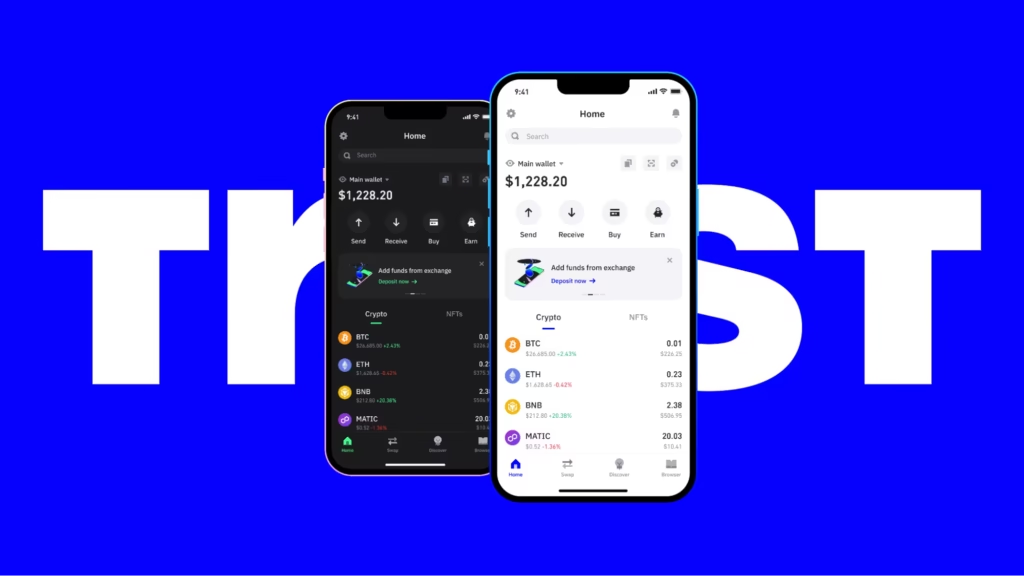
When it comes to wallets for SHIB, Trust Wallet is almost always among the top recommendations for beginner and intermediate users.
The reason is simple:
-it combines a very easy-to-use interface;
-support for thousands of cryptocurrencies;
-complete self-custody;
-integration with the Web3 ecosystem;
-quick access to ERC-20 tokens like Shiba Inu.
Trust Wallet is a software wallet available primarily as a mobile app and is used by millions of crypto users worldwide.
Why is it so popular for SHIB?
Shiba Inu operates on the Ethereum blockchain, and Trust Wallet offers full support for:
-ERC-20 tokens;
-Ethereum;
-Shibarium;
-DeFi applications;
-DEXs and Web3.
This means users can:
-store SHIB;
-send and receive tokens;
-connect the wallet to decentralized applications;
-make crypto swaps;
-interact with the Ethereum ecosystem.
For many users, Trust Wallet is the first step toward self-custody.
A very simple experience for beginners
One of the biggest advantages of Trust Wallet is its simplicity.
Compared to more technical wallets, the app is built for users who:
-do not have advanced crypto experience;
-want to buy and keep SHIB quickly;
-want simple access to their own funds;
-do not want to learn complicated trading concepts.
The setup process is relatively simple:
-you install the app;
-you receive the seed phrase;
-you save the backup;
-you can start using the wallet immediately.
The interface is close to modern fintech applications, which significantly lowers the barrier to entry for new users.
Self-custody and complete control
Trust Wallet is a non-custodial wallet.
This means that:
-you control the private keys;
-you control the seed phrase;
-you own the access to the funds.
Funds are not kept on a centralized exchange.
This is one of the reasons why many users move SHIB from platforms like:
-Binance;
-Bybit;
-Kraken;
directly to personal wallets like Trust Wallet.
Compatibility with DeFi and Web3
Trust Wallet is not just a simple storage wallet.
It also allows:
-connecting to DEXs;
-using DeFi applications;
-interacting with NFTs;
-swapping between tokens;
-access to the Web3 ecosystem.
For SHIB users interested in the decentralized ecosystem, this is very important.
Are there any disadvantages?
Yes. Like any software wallet, Trust Wallet comes with certain risks.
Being connected to the internet, the wallet can be affected by:
-phishing;
-fake applications;
-malware;
-phone compromise.
For this reason, the security of the user’s device remains extremely important.
For large amounts of SHIB, many users choose to combine:
-Trust Wallet for daily use;
-a hardware wallet for long-term storage.
Who is Trust Wallet suitable for?
Trust Wallet is ideal for:
-beginner users;
-users who want a simple experience;
-people who use SHIB occasionally;
-DeFi and Web3 users;
-self-custody without major technical complexity.
For most new users buying SHIB for the first time, Trust Wallet represents one of the most accessible and intuitive options available.
2. MetaMask
 Metamask wallet[/caption;
If Trust Wallet is considered one of the simplest wallets for beginners, MetaMask is often the choice of users who want full access to the Ethereum ecosystem and decentralized applications.
MetaMask is one of the best-known crypto wallets in the world and has become almost a standard for:
-DeFi;
-Web3;
-DEXs;
-NFTs;
-decentralized applications built on Ethereum.
For SHIB users who want more than just simple token storage, MetaMask offers a high level of flexibility and control.
Why do so many users use MetaMask?
The main reason is its excellent integration with the Ethereum ecosystem.
Because Shiba Inu is an ERC-20 token, MetaMask allows:
-storing SHIB tokens;
-connecting to Web3 applications;
-using DEXs;
-interacting with staking and DeFi;
-access to the Shibarium ecosystem;
-managing ERC-20 tokens all in one place.
Practically, MetaMask functions as a “digital identity” for the decentralized crypto ecosystem.
Direct access to the DeFi ecosystem
One of the biggest advantages of MetaMask is its quick connection to decentralized applications.
SHIB users can use the wallet for:
-swaps on DEXs;
-providing liquidity;
-staking;
-interacting with NFTs;
-using Web3 applications;
-accessing DeFi protocols.
In many cases, MetaMask is the first wallet supported by major decentralized applications.
For this reason, advanced users prefer it over more simplified wallets.
Available on browser and mobile
MetaMask is available both as a:
-browser extension;
-mobile application;
and this makes it very flexible.
The browser extension is extremely popular because it allows instant connection to:
-DEXs;
-NFT marketplaces;
-Web3 applications;
-DeFi platforms;
directly from the browser.
Complete self-custody
Just like Trust Wallet, MetaMask is a non-custodial wallet.
This means that:
-the user controls the private keys;
-the seed phrase belongs to the user;
-funds are not kept on a centralized exchange.
For many SHIB users, this is a major advantage because they prefer to control their funds themselves rather than keeping them on centralized platforms.
The difference between a wallet and an exchange
Many users confuse MetaMask with an exchange, but the two have completely different roles.
An exchange like:
-Binance;
-Bybit;
-Kraken;
is built for:
-trading;
-order books;
-market orders;
-futures and leverage;
-active trading.
In contrast, MetaMask is built for:
-self-custody;
-Web3 interaction;
-DeFi;
-control of funds;
-connecting to decentralized applications.
In recent years, more and more users are also using crypto ramps like Abarai to buy crypto and send the funds directly to wallets like MetaMask.
Is MetaMask suitable for beginners?
It depends heavily on the user’s experience.
MetaMask is extremely powerful, but it can seem more complex than other wallets.
Users need to understand concepts such as:
-gas fees;
-network switching;
-token imports;
-smart contracts;
-transaction approvals;
-seed phrase and Web3 security.
For someone completely new to crypto, these concepts can seem difficult at first.
Still, for users who want to explore the Ethereum and Shibarium ecosystem more deeply, MetaMask offers much more flexibility than basic wallets.
Risks and security
Being a hot wallet connected to the internet, MetaMask also comes with certain risks.
The most common problems arise from:
-phishing;
-fake websites;
-malicious smart contracts;
-compromised extensions;
-fraudulent links;
-excessive token approvals.
For this reason, users must be very careful when connecting their wallet to Web3 applications.
Many advanced users choose to combine:
-MetaMask for DeFi and Web3 access;
-a hardware wallet for maximum security.
Who is MetaMask suitable for?
MetaMask is ideal for:
-DeFi users;
-Web3 users;
-people who use DEXs;
-advanced Ethereum users;
-SHIB users interested in the decentralized ecosystem.
For users who just want simple SHIB storage, other wallets may be more intuitive.
But for those who want full access to the decentralized crypto ecosystem, MetaMask remains one of the most powerful options available.
3. Ledger
 Ledger wallet
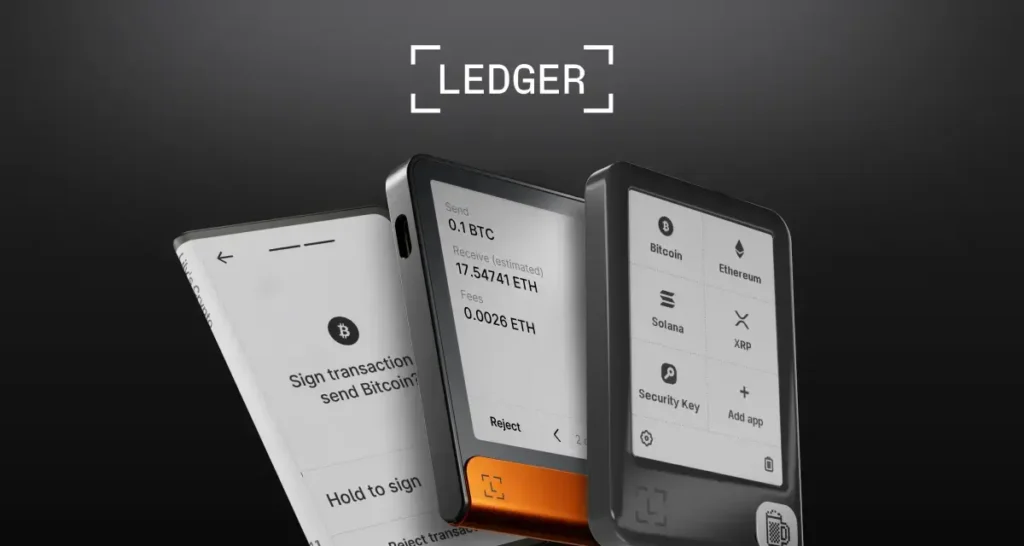
When it comes to security in crypto, hardware wallets are considered the industry standard, and Ledger is probably one of the most well-known names in this category.
Spre deosebire de wallet-urile software precum:
-Trust Wallet;
-MetaMask;
-Coinbase Wallet;
Ledger is a physical device specially built for keeping private keys offline.
For users holding large amounts of SHIB or investing for the long term, this aspect can make a major difference.
What is a hardware wallet?
A hardware wallet is a dedicated device that keeps private keys separate from the internet and the user’s devices.
Practically:
-private keys are not exposed to the browser;
-they are not stored directly on the phone;
-they cannot be easily accessed by ordinary malware.
This considerably reduces the risk of online attacks.
In Ledger’s case, transactions must be physically confirmed on the device, which adds an extra layer of security.
Why is Ledger so popular?
The main reason is security.
In the crypto ecosystem, there are permanent risks such as:
–phishing;
-malware;
-fake websites;
-keyloggers;
-malicious smart contracts;
-attacks on the browser.
Ledger is built precisely to reduce exposure to such problems.
Even if:
-the user’s laptop is compromised;
-the browser is infected;
-the phone is attacked;
private keys can remain protected because they do not leave the hardware device.
Compatibility with SHIB and the Ethereum ecosystem
Ledger supports:
-Shiba Inu;
-ERC-20 tokens;
–Ethereum;
-Shibarium;
-thousands of other cryptocurrencies.
The wallet can be used together with applications such as:
-MetaMask;
-Ledger Live;
-compatible Ethereum Web3 wallets.
Many users use the combination:
-MetaMask for DeFi access;
-Ledger for securely signing transactions.
This approach offers both Web3 flexibility and high security.
Why do long-term investors choose Ledger?
For users who buy SHIB as a long-term investment, security becomes the top priority.
Many investors do not trade daily and prefer:
-offline storage;
-reduced risk of hacking;
-complete control over private keys;
-protection against online attacks.
In such situations, hardware wallets are considered one of the best solutions available.
Ledger and self-custody
Ledger is built around the concept of self-custody.
This means that:
-the user controls the seed phrase;
-the user controls the private keys;
-funds are not kept on an exchange.
This is why many users withdraw their SHIB from centralized platforms after purchasing.
In practice, users often buy SHIB through:
-crypto exchanges;
-crypto ramps;
-fintech platforms compatible with crypto.
Popular platforms allow the purchase and trading of SHIB tokens, after which users choose to transfer the funds to personal wallets for more control and security.
In parallel, more and more users are also using crypto ramps for quick crypto purchasing and direct transfer to their own Ledger or MetaMask wallet.
Are there any disadvantages?
Yes. Although Ledger offers very high security, there are also certain trade-offs.
Additional cost
Unlike free software wallets, Ledger requires the purchase of a physical device.
Less convenient for daily use
For each transaction:
-the device must be connected;
-the transaction must be manually confirmed;
which can be slower than using a hot wallet.
Total responsibility
If the user loses:
-the seed phrase;
-the backup;
recovering funds can become impossible.
For this reason, backing up the seed phrase is extremely important.
Is Ledger suitable for beginners?
It depends on the user’s goals.
For someone completely new to crypto, Ledger may seem more complicated at first.
However, for users who:
-invest large sums;
-want maximum security;
-plan to keep SHIB for the long term;
a hardware wallet can be one of the best investments.
Who is Ledger suitable for?
Ledger is ideal for:
-long-term investors;
-users who prioritize security;
-people holding large portfolios;
-advanced crypto users;
-self-custody with a low risk of online attacks.
For many experienced users, the combination of:
-a hardware wallet for storage;
-a software wallet for daily use;
represents the ideal balance between security and accessibility.
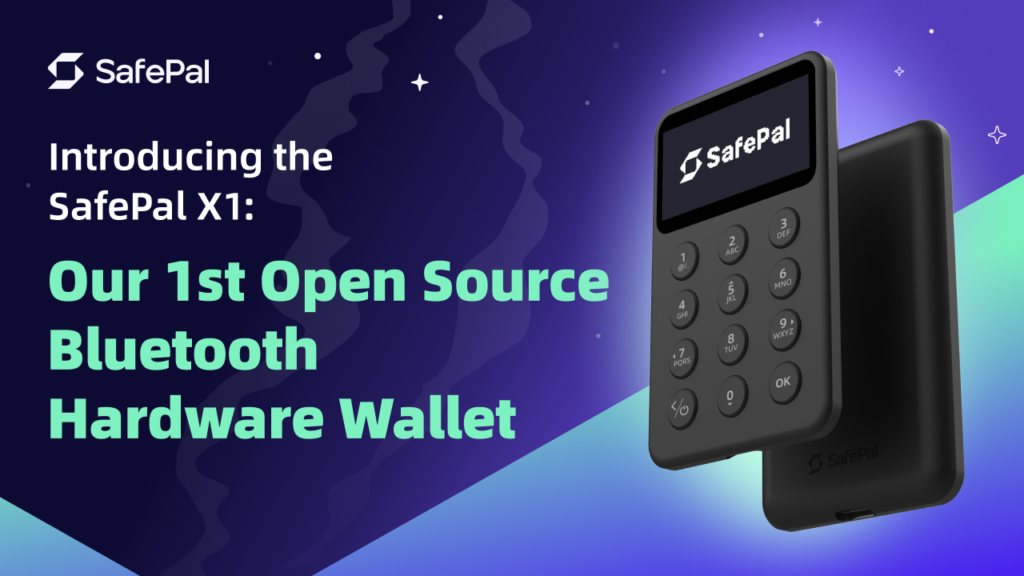
4. SafePal
Very good compatibility with the crypto ecosystem
SafePal supports:
- Shiba Inu (SHIB);
- ERC-20 tokens;
- Ethereum;
- BNB Chain;
- multiple blockchain networks;
- Web3 and DeFi applications.
This is important for users who do not just use SHIB, but also other cryptocurrencies and decentralized applications.
In practice, the wallet allows:
- crypto storage;
- swaps between tokens;
- connecting to DEXs;
- interaction with Web3 applications;
- managing multiple networks in one place.
An experience oriented towards active users
SafePal is built more for active users in the crypto ecosystem.
The interface includes features such as:
- integrated swaps;
- DeFi access;
- multi-chain management;
- quick connection to decentralized applications;
- support for NFTs.
For this reason, the wallet is often preferred by users who frequently use:
- DEXs;
- DeFi protocols;
- Web3 applications;
- multi-chain ecosystems.
The difference between SafePal and simple wallets
Compared to wallets like Trust Wallet, SafePal tries to offer more features in a single application.
This can be an advantage for experienced users, but for beginners it may seem more complex.
In general:
- Trust Wallet is oriented more toward simplicity;
- MetaMask toward the Ethereum ecosystem and Web3;
- SafePal toward multi-chain and DeFi users.
Hardware wallet support
A very important aspect is that SafePal also offers its own hardware wallets.
Thus, users can combine:
- the flexibility of a software wallet;
- the security of a hardware wallet.
This approach is especially appreciated by users who want quick access to DeFi, but also extra protection for their funds.
Self-custody and control over funds
Like other non-custodial wallets, SafePal offers complete control over:
- private keys;
- the seed phrase;
- crypto funds.
This means users do not depend on a centralized exchange to access their SHIB.
Many users initially buy SHIB through:
- crypto exchanges;
- crypto ramps;
- crypto-friendly fintech platforms;
after which they transfer the funds to personal wallets for self-custody.
Are there any disadvantages?
Yes. Although SafePal offers many useful features, there are also a few limitations.
The interface can seem cluttered
For new users, the large number of features can cause confusion.
The wallet is more oriented toward people already familiar with:
- DeFi;
- DEXs;
- Web3;
- multiple blockchains.
Less popular than other large wallets
Compared to MetaMask or Trust Wallet, SafePal has a smaller community and fewer tutorials available online.
Risks specific to hot wallets
Being connected to the internet, the wallet remains exposed to risks such as:
- phishing;
- malware;
- fraudulent links;
- malicious smart contracts.
For this reason, users must be careful when interacting with Web3 applications.
Who is SafePal suitable for?
SafePal is ideal for:
- multi-chain users;
- active DeFi users;
- people who frequently use Web3;
- intermediate and advanced users;
- users who want many features in a single application.
For users who just want simple SHIB storage, other wallets may be more intuitive.
But for those who actively use the decentralized crypto ecosystem, SafePal can offer a lot of flexibility.
5. Rabby Wallet
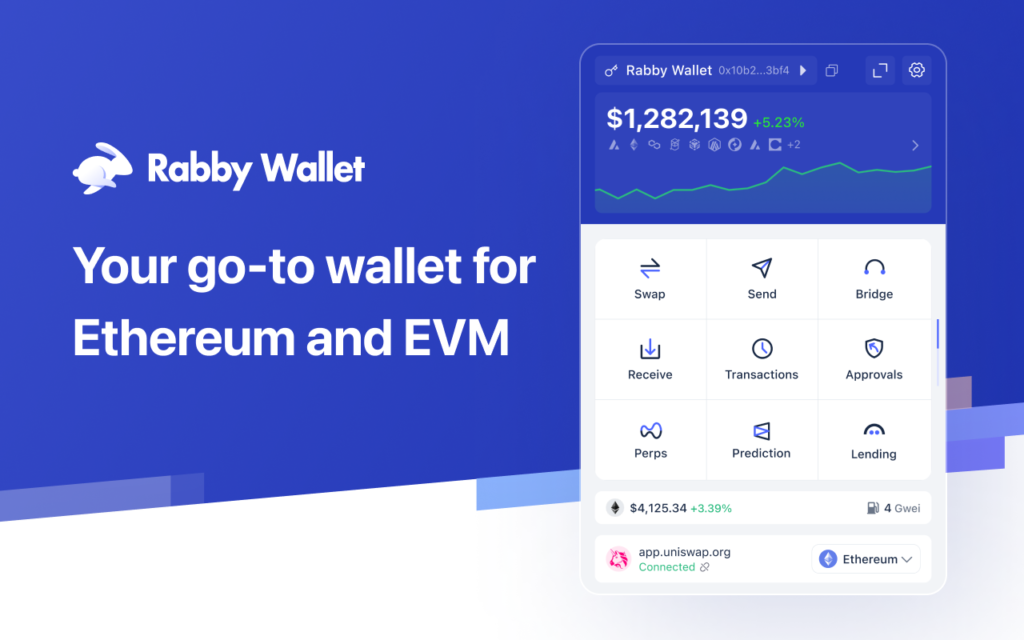
Rabby Wallet has become extremely popular in the crypto community, especially among active users of the Ethereum and Web3 ecosystem.
Although it is less known to beginners compared to Trust Wallet or MetaMask, many advanced users consider it one of the best wallets for:
-DeFi;
-Web3;
-multi-chain use;
-extra security during transactions;
-managing Ethereum and ERC-20 assets like SHIB.
For Shiba Inu users who frequently use decentralized applications and DeFi protocols, Rabby Wallet offers many useful features.
What is Rabby Wallet?
Rabby is a Web3 wallet developed specifically for the Ethereum ecosystem and decentralized applications.
It functions primarily as a:
-browser extension;
-Web3-compatible wallet;
-interface for DeFi applications and DEXs.
At first glance, it may seem similar to MetaMask, but Rabby tries to improve the user experience through:
-more transparency;
-security warnings;
-better transaction management;
-automatic detection of blockchain networks.
Why is it appreciated in the DeFi community?
One of the biggest advantages of Rabby Wallet is the optimized experience for active Web3 users.
The wallet offers:
-automatic detection of the correct blockchain;
-clear transaction preview;
-warnings for suspicious smart contracts;
-displaying balance changes before confirmation;
-simplified management for multiple networks.
These features are highly appreciated because many attacks in Web3 occur from:
-signing the wrong transactions;
-using malicious smart contracts;
-confusion between blockchain networks;
-excessive token approvals.
Rabby tries to reduce these risks through a clearer and more transparent interface.
Compatibility with SHIB and the Ethereum ecosystem
Rabby Wallet supports:
-Shiba Inu;
-ERC-20 tokens;
-Ethereum;
-multiple EVM blockchains;
-Web3 applications;
-DEXs and DeFi protocols.
For SHIB users interested in:
-swaps;
-staking;
-DeFi;
-NFTs;
-Web3;
Rabby can be a very powerful option.
A better multi-chain experience
One of the problems frequently encountered in MetaMask is manually changing blockchain networks.
Rabby tries to simplify this process through:
-automatic detection of the required network;
-automatic switching between compatible blockchains;
-simpler management for multi-chain assets.
For users active in DeFi, this feature can save a lot of time and reduce errors.
Self-custody and complete control
Rabby Wallet is a non-custodial wallet.
This means that:
-the user controls the private keys;
-the seed phrase belongs to the user;
-funds are not kept on an exchange.
Many users buy SHIB through:
-crypto exchanges;
-crypto ramps;
-fintech platforms compatible with crypto;
after which they transfer the funds to personal wallets like Rabby for access to the Web3 and DeFi ecosystem.
Are there any disadvantages?
Yes. Although Rabby Wallet is highly appreciated by advanced users, there are also certain limitations.
It can seem complex for beginners
Rabby is built mostly for users familiar with:
-DeFi;
-Web3;
-smart contracts;
-Ethereum and EVM blockchains.
For someone new to crypto, the interface and available features may seem complicated.
Available primarily as a browser extension
Compared to wallets oriented more toward mobile, Rabby is used predominantly on desktop and browser.
Risks specific to hot wallets
Being connected to the internet, there are still risks such as:
-phishing;
-malicious smart contracts;
-compromised extensions;
-fraudulent links.
For this reason, many users choose to combine:
-Rabby Wallet for Web3 and DeFi;
-a hardware wallet for extra security.
Who is Rabby Wallet suitable for?
Rabby Wallet is ideal for:
-DeFi and Web3 users;
-advanced Ethereum users;
-people who frequently use DEXs;
-multi-chain users;
-users who want more control and transparency in transactions.
For new users who just want simple SHIB storage, other wallets may be more intuitive.
But for those who actively use the decentralized ecosystem, Rabby Wallet is considered by many to be one of the best modern alternatives to MetaMask.
Hardware wallet vs software wallet — what do SHIB users choose?
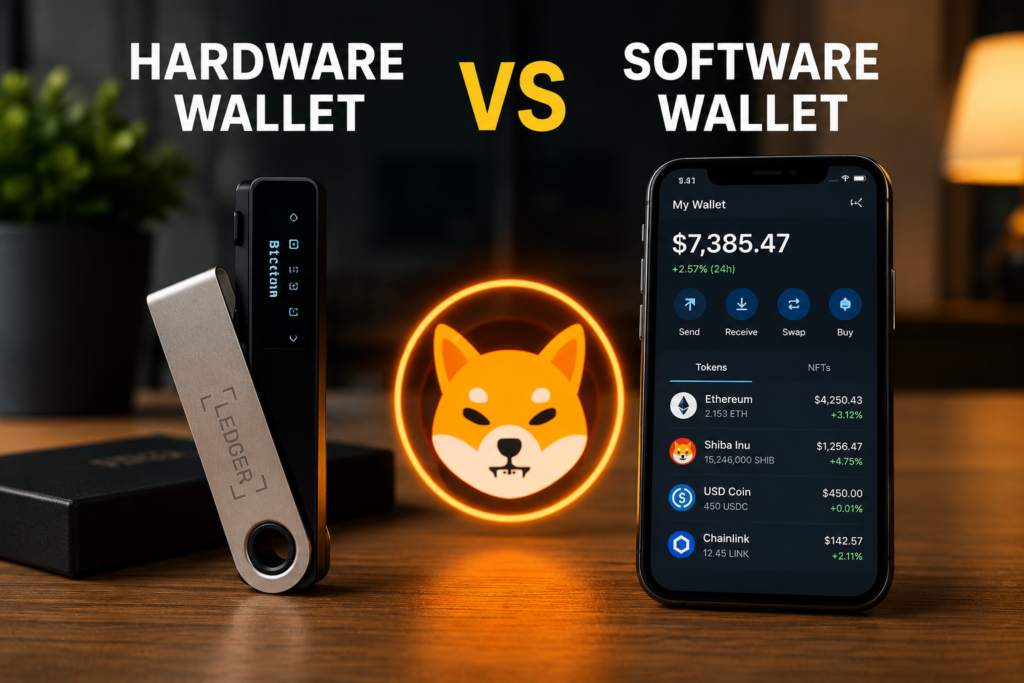
One of the most important decisions for users holding Shiba Inu is choosing between a:
-hardware wallet;
-software wallet.
Although both allow storing and managing SHIB tokens, the experience and security level are very different.
Many new users do not initially understand the difference between the two types of wallets and choose solutions that do not fit their real needs.
In practice, the choice depends on:
-how much SHIB you hold;
-how often you use cryptocurrencies;
-whether you use DeFi and Web3;
-how important security is to you;
-whether you invest for the short term or long term.
What is a software wallet?
A software wallet is a wallet connected to the internet, usually available in the form of a:
-mobile application;
-browser extension;
-desktop application.
Popular examples include:
-Trust Wallet;
-MetaMask;
-SafePal;
-Rabby Wallet.
These wallets are built for quick access and daily use.
Advantages of software wallets
The main advantage is convenience.
Users can:
-quickly send SHIB;
-make crypto swaps;
-connect the wallet to DEXs;
-use Web3 applications;
-interact with DeFi and NFTs;
-access funds from anywhere.
For active users in the crypto ecosystem, software wallets are almost indispensable.
Also, they are very popular because:
-they are free;
-they are quick to set up;
-they have intuitive interfaces;
-they are easy to use on phone and browser.
Disadvantages of software wallets
Being permanently connected to the internet, software wallets are more exposed to attacks.
Risks include:
-phishing;
-malware;
-compromised extensions;
-fake websites;
-malicious smart contracts;
-attacks on the user’s device.
For this reason, users holding large amounts of SHIB often avoid keeping their entire portfolio in a hot wallet.
What is a hardware wallet?
A hardware wallet is a physical device built for keeping private keys offline.
Popular examples include:
-Ledger;
-Trezor.
These devices are considered the most secure storage method for cryptocurrencies.
Private keys remain offline and are not directly exposed to the browser or phone.
Advantages of hardware wallets
The main advantage is very high security.
A hardware wallet offers:
-protection against many online attacks;
-offline storage of private keys;
-complete control over funds;
-reduced risk of hacking;
-extra protection for large portfolios.
For investors keeping SHIB for the long term, this type of wallet is often considered the best choice.
Disadvantages of hardware wallets
There are, however, certain trade-offs.
Hardware wallets:
-cost money;
-are less convenient for daily use;
-require manual confirmation of transactions;
-can seem complicated to new users.
In addition, the user must keep the seed phrase in an extremely secure place.
What do most SHIB users choose?
In practice, many users use a combination of both types of wallets.
For example:
-a software wallet for daily use and DeFi;
-a hardware wallet for long-term storage.
This approach allows:
-quick access to the Web3 ecosystem;
-flexibility for transactions;
-better security for important funds.
How do users buy SHIB before moving it to a wallet?
In most cases, users buy SHIB through:
-crypto exchanges;
-crypto ramps;
-fintech platforms compatible with crypto.
Some users use exchanges for active trading and portfolio management.
Others prefer crypto ramps because the experience is simpler and oriented toward:
-quick purchasing;
-self-custody;
-direct transfer to the personal wallet.
After purchasing, many users choose to move their SHIB to a personal wallet for more control over funds and private keys.
Which option is better?
There is no perfect solution for everyone.
In general:
-software wallets are better for convenience and daily use;
-hardware wallets are better for security and long-term storage.
The right choice depends on the user’s experience, how they use cryptocurrencies, and the desired level of security.
How do you keep your SHIB safe?
In the crypto ecosystem, security is one of the most important responsibilities of the user.
Unlike the traditional banking system, where there is often the possibility of recovering accounts or canceling transactions, in crypto the user is directly responsible for:
-private keys;
-the seed phrase;
-access to the wallet;
-the security of funds.
For this reason, choosing a good wallet is important, but just as important is how the user protects their SHIB after purchasing.
Many users lose access to cryptocurrencies not because of the blockchain or the wallet, but because of relatively simple security mistakes.
The seed phrase is the key to the entire wallet
When you create a crypto wallet, you receive a seed phrase.
This usually consists of:
-12 words;
-24 words;
and represents the main master key to access your funds.
Practically, anyone who holds the seed phrase can completely control the wallet and all the cryptocurrencies in it.
For this reason:
-the seed phrase must not be sent to anyone;
-it must not be saved in online conversations;
-it must not be kept in unsecure screenshots;
-it must not be entered on suspicious websites.
One of the most frequent frauds in crypto involves stealing the seed phrase through:
-fake websites;
-fake applications;
-phishing emails;
-fraudulent links;
-fake wallet verifications.
Many users lose funds through phishing
Phishing is one of the biggest problems in the crypto ecosystem.
Attackers frequently create:
-websites identical to the original ones;
-fake wallets;
-compromised browser extensions;
-malicious sponsored links;
-clones of real platforms.
The goal of the attackers is almost always the same:
-obtaining the seed phrase;
-obtaining transaction approvals;
-stealing funds from the wallet.
For this reason, SHIB users must always verify:
-the website address;
-the downloaded application;
-the links accessed;
-the smart contracts signed.
Do not keep large amounts on exchanges
Many users buy SHIB through:
-crypto exchanges;
-crypto ramps;
-fintech platforms compatible with crypto;
after which they leave the funds on the platform.
While this may be convenient for active trading, many users prefer to transfer SHIB to personal wallets for:
-self-custody;
-complete control over funds;
-reduced risk of dependency on centralized platforms.
In the crypto ecosystem, there is the expression:
“Not your keys, not your coins.”
This highlights the fact that funds kept on an exchange are technically controlled by that platform, not directly by the user.
Always verify the blockchain network
A very common mistake occurs when users send SHIB on the wrong network.
Because SHIB is an ERC-20 token, users must pay attention to:
-the Ethereum network;
-the wallet address;
-blockchain compatibility;
-transaction fees.
Sending cryptocurrencies on the wrong blockchain can lead to the loss of funds.
For this reason, it is recommended:
-to check the address multiple times;
-to initially send a small test amount;
-to check the wallet’s compatibility with Ethereum and ERC-20.
Use strong passwords and extra protection
In addition to seed phrase security, it is recommended that users use:
-complex passwords;
-biometric authentication;
-2FA where available;
-secured devices;
-offline backup for important information.
In the case of hot wallets such as:
-Trust Wallet;
-MetaMask;
-Rabby Wallet;
-SafePal;
the security of the user’s device is extremely important.
Hardware wallets offer extra security
For users holding large amounts of SHIB, hardware wallets are considered one of the safest options.
These keep private keys offline and significantly reduce exposure to:
-phishing;
-malware;
-attacks on the browser;
-compromised extensions;
-fraudulent websites.
For this reason, many long-term investors use the combination:
-hardware wallet for storage;
-software wallet for daily use and DeFi.
Security in crypto means personal responsibility
A crypto wallet offers freedom and control over funds, but it also comes with responsibility.
In most cases, SHIB security depends directly on:
-how the user keeps the seed phrase;
-the websites and applications used;
-the security of the device;
-attention to transactions and smart contracts.
With correct security measures, users can keep their SHIB safe and significantly reduce the risks associated with the crypto ecosystem.
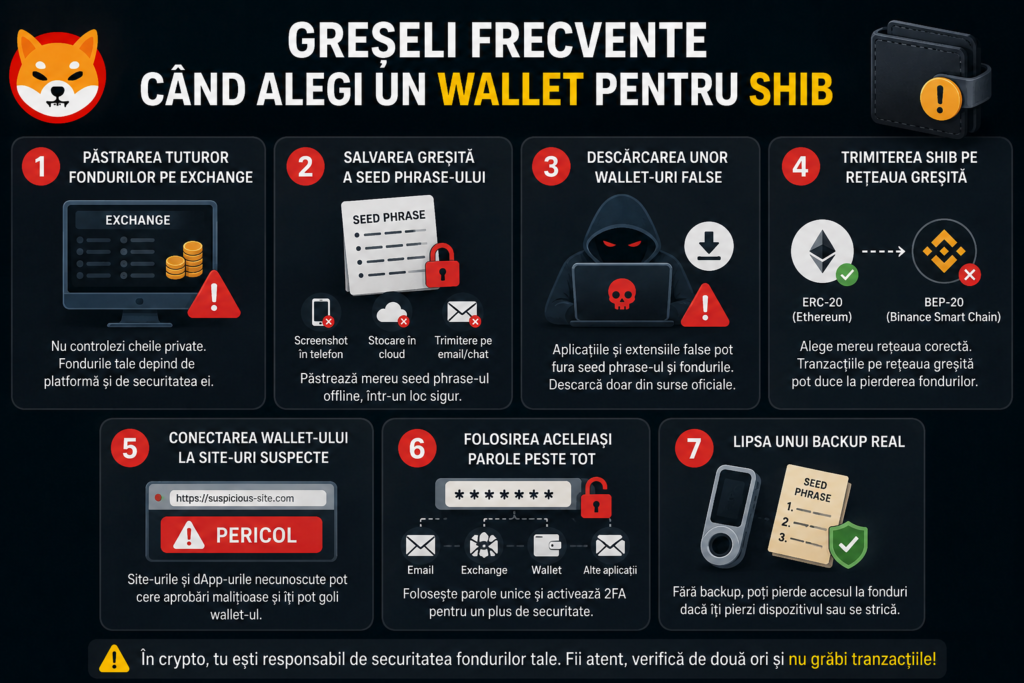
Frequent mistakes when choosing a wallet for SHIB
Many users who buy Shiba Inu for the first time focus only on:
-buying the tokens;
-the price;
-market hype;
-rapid growth;
and completely ignore the security and management of funds.
In practice, the biggest problems in the crypto ecosystem often arise from simple mistakes made by users.
Understanding these risks can make the difference between a secure experience and losing funds.
1. Keeping all funds on the exchange
One of the most common mistakes is keeping SHIB directly on an exchange for very long periods.
Many users leave funds on platforms because:
-it is more convenient;
-they have quick access to trading;
-they do not want to learn how wallets work.
However, in this scenario:
-the user does not directly control the private keys;
-funds depend on that platform;
-there is a dependency on the exchange’s infrastructure.
For this reason, many users choose to move SHIB to personal wallets for self-custody and complete control over funds.
2. Saving the seed phrase incorrectly
The seed phrase is practically the master key to the wallet.
Despite this, very many users keep it in unsecure ways such as:
-screenshots on the phone;
-Google Drive;
-unsecured notes;
-Discord or Telegram conversations;
-personal emails.
This is one of the most dangerous mistakes because anyone who obtains the seed phrase can completely control the wallet.
In general, the seed phrase should be:
-kept offline;
-written on paper or a dedicated medium;
-not shared with anyone;
-kept in a safe place.
3. Downloading fake wallets
In the crypto ecosystem, there are very many fake applications and websites built specifically to steal funds.
Users may encounter:
-fake apps in app stores;
-fake browser extensions;
-websites that mimic popular wallets;
-malicious sponsored links;
-clones of real platforms.
The goal of attackers is usually:
-theft of the seed phrase;
-obtaining access to the wallet;
-signing malicious transactions.
From this reason, wallets must be downloaded only from official sources and carefully verified.
4. Sending SHIB on the wrong network
Another very common mistake is using an incompatible blockchain network.
Because SHIB is an ERC-20 token, users must check:
-the Ethereum network;
-wallet compatibility;
-the correct address;
-the fees and blockchain used.
Sending tokens on the wrong network can lead to the loss of funds.
For this reason, it is recommended:
-to check the address multiple times;
-to first send a small test amount;
-to confirm ERC-20 compatibility.
5. Connecting the wallet to suspect applications
Many SHIB users use:
–DEXs;
-DeFi applications;
-Web3 platforms;
-NFT marketplaces.
The problem is that some applications may request dangerous approvals for the wallet.
By signing malicious smart contracts, users can grant access to the funds in the wallet without realizing it.
For this reason, it is important:
-to verify the applications used;
-to read approvals before signing;
-to avoid unknown websites;
-to periodically revoke unnecessary permissions.
6. Using the same password everywhere
Many users reuse the same passwords for:
-email;
-exchanges;
-wallets;
-crypto apps.
This practice greatly increases the risk of accounts being compromised.
It is recommended:
-to use unique passwords;
-to activate 2FA where possible;
-to use a secure password manager.
7. Lacking a real backup
Some users believe that simply installing the wallet is enough.
But if:
-the phone is lost;
-the laptop breaks down;
-the application is deleted;
access to funds depends completely on the seed phrase and backup.
Without a correct backup, funds can become impossible to recover.
Frequently asked questions about wallets for SHIB
Which is the best wallet for Shiba Inu?
It depends on the user’s needs.
For beginners, wallets like Trust Wallet are popular due to their simplicity.
For advanced and DeFi users, MetaMask or Rabby Wallet offer more flexibility.
For maximum security, hardware wallets like Ledger are often considered the best option.
Is it safe to keep SHIB on an exchange?
Many users use exchanges for purchasing and trading, but prefer to move funds to personal wallets for self-custody and complete control over private keys.
What does self-custody mean?
Self-custody means that the user controls:
-the private keys;
-the seed phrase;
-access to funds.
Funds are not managed by an exchange or a centralized platform.
Can I use SHIB in MetaMask?
Yes. SHIB is an ERC-20 token and can be stored and used in MetaMask and other Ethereum-compatible wallets.
What is the difference between a hardware wallet and a software wallet?
A software wallet is connected to the internet and offers quick access to crypto and Web3.
A hardware wallet keeps private keys offline and offers a higher level of security.
What happens if I lose the seed phrase?
If you lose the seed phrase and no longer have access to the wallet, recovering funds can become impossible.
For this reason, backing up the seed phrase is extremely important.
Can I buy SHIB directly inside a personal wallet?
Yes. Some platforms allow buying crypto and sending it directly to the user’s wallet, without keeping the funds on an exchange.